Voltage Detectors for 10 kV, 20 kV and 33 kV Networks: Choosing the Right Model
Which voltage detector do you need for a 10 kV, 20 kV or 33 kV network? We compare HASEGAWA hot-stick, universal-joint and telescopic detectors by voltage range and place of use.
Most European distribution networks run at 10 kV, 20 kV or 33 kV, with 11 kV and 6.6 kV common in the United Kingdom and in older installations elsewhere. Whatever the voltage, the first task before working in a switchgear panel, a pole-mounted transformer or on an overhead line is the same: verify that the circuit is dead with a voltage detector rated for that voltage.
This guide compares HASEGAWA voltage detectors for European medium-voltage networks by voltage range, design and place of use, and lists the criteria for choosing the right model.
Why the voltage range matters
Capacitive voltage detectors sense the electric field between the conductor they touch and earth, and indicate "voltage present" when that field exceeds a threshold, the threshold (operating start) voltage. The threshold is set for the detector's rated voltage range:
- A detector rated below your system voltage may be overstressed and is not safe to use.
- A detector rated far above your system voltage has a higher threshold and may show a live conductor as dead.
The rule is therefore simple: the rated voltage range on the detector must include the nominal voltage of the system you are working on. IEC 61243-1 covers capacitive detectors for AC systems above 1 kV; see What Is IEC 61243-1?.
Which HASEGAWA detector covers which voltage?
| Model | Rated voltage (AC) | 10–11 kV | 20 kV | 33 kV | Design |
|---|---|---|---|---|---|
| HST-30 | 3 – 34.5 kV | ✓ | ✓ | ✓ | Hot stick; long-pole versions up to 5055 mm |
| HST-30L | 3 – 34.5 kV | ✓ | ✓ | ✓ | Hot stick, threshold 500 V ± 100 V |
| HST-35V | 6 – 35 kV | ✓ | ✓ | ✓ | Universal joint, IPX4 |
| HWB-35 | 6 – 35 kV | ✓ | ✓ | ✓ | Universal joint, IP45 equivalent |
| HWA-33P | 1 – 35 kV | ✓ | ✓ | ✓ | Universal joint, 4 ranges |
| HWA-33X | 11 – 33 kV | 11 kV only | ✓ | ✓ | Universal joint, IEC 61243-1 |
| HSS-36B1 | 80 V – 36 kV | ✓ | ✓ | ✓ | Telescopic, LV and MV |
| HSS-25B1 | 80 V – 25 kV | ✓ | ✓ | – | Telescopic, LV and MV |
| HST-20N | 3 – 25 kV (AC and DC) | ✓ | ✓ | – | Hot stick, AC/DC |
| HSF-11 | 80 V – 11.4 kV | ✓ | – | – | Hand-held contact detector |
HWA-33X covers 11 kV but not 10 kV, as its range starts at 11 kV. Detectors rated up to 25 kV must not be used on 33 kV systems.
Five criteria for choosing the right model
1. Switchgear or overhead line?
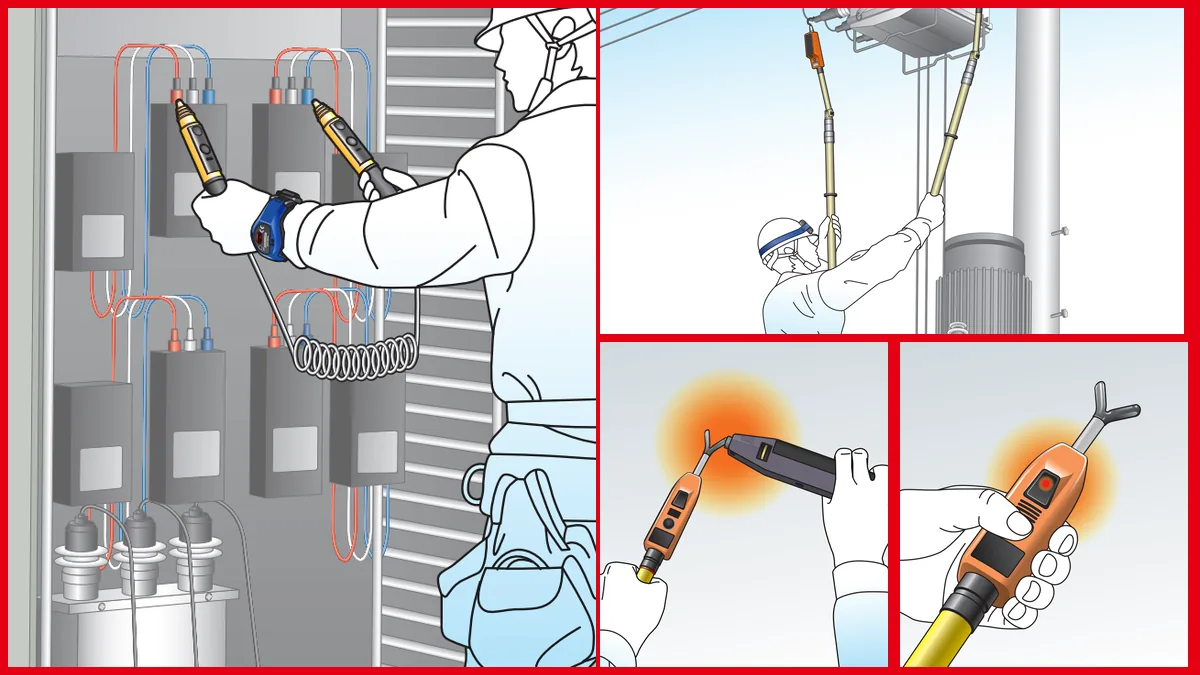
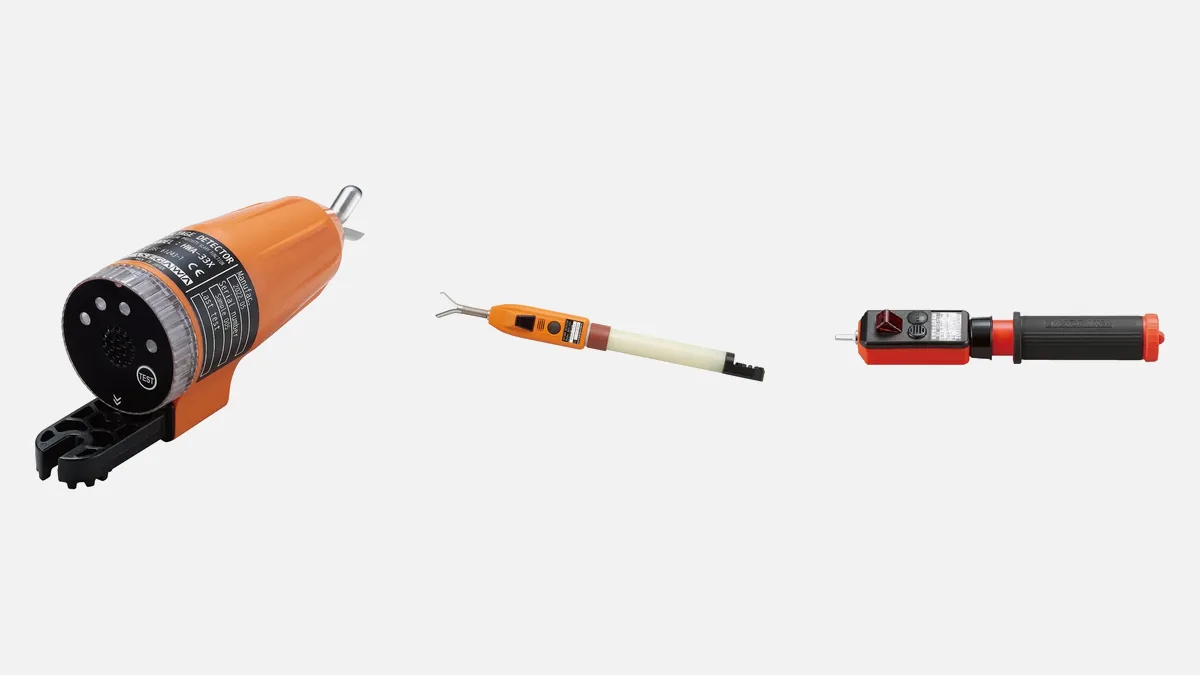
- Indoor switchgear and ring main units: Short detectors that can be angled are easiest to use. Universal-joint models (HST-35V, HWB-35, HWA-33P, HWA-33X) fit a common insulating pole and their angle can be adjusted to reach conductors in tight panels.
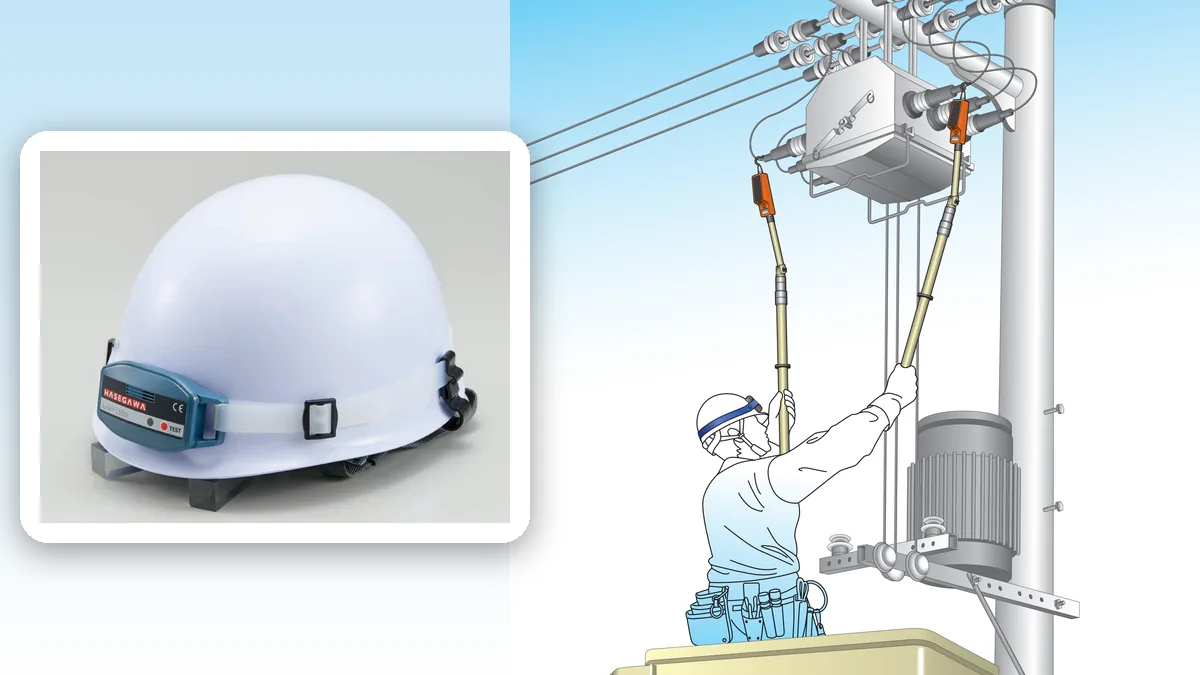
- Overhead lines and pole-mounted transformers: Reach matters. Hot-stick models such as HST-30 and its long-pole versions (2260 mm, 3145 mm and 5055 mm) let you touch the conductor from a safe distance.
2. Do you also need to test low voltage?
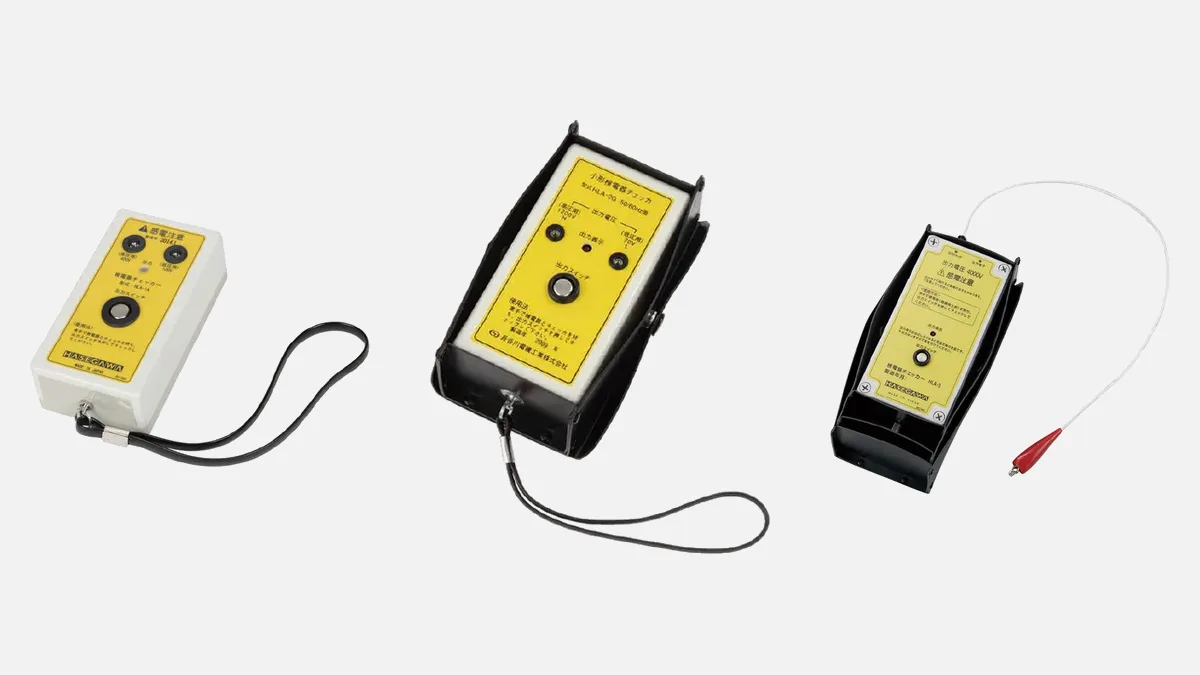
If the same team works on the MV switchgear and the LV board of a substation, HSS-36B1 detects from 80 V up to 36 kV with one instrument. When the pole is extended, only medium voltage is detected; low voltage is tested in the retracted position.
3. Rain, sunlight and noise
Outdoors, a red LED can be hard to see in sunlight and a buzzer hard to hear near running plant. HWB-35 has a red LED that can be distinguished at 50,000 lux, an intermittent tone of 80 dB or more and water resistance equivalent to IP45.
4. Several voltage levels in one network
Where 10 kV, 20 kV and 33 kV installations exist side by side, a detector with selectable ranges avoids carrying several instruments. HWA-33P works in four ranges, 1 kV, 15 kV, 25 kV and 35 kV, so each voltage is tested with a suitable threshold once the correct range is selected.
5. Standards and climate
If your procedures require IEC 61243-1, HWA-33X is designed to that standard, with climatic category N (−25 °C to +55 °C, 20–96 % relative humidity) and indication group III. For other models, ask us which standard they were designed to; see Standards & Compliance.
How to verify absence of voltage on an MV system
- Check the detector. Before use, confirm that it works with its self-test or a suitable voltage detector tester. Do not use it if the battery is weak.
- Wear the right PPE. Use insulating gloves of the correct class, a helmet and a face shield, and hold the insulating pole only by its handle.
- Test every phase. Touch each of the three phases at the work location, where possible on both sides of the switching device.
- Watch for the indication. No light or sound while in contact means that phase is dead.
- Check the detector again. Confirm afterwards that it still works; a detector that failed during the test gives false confidence.
- Earth immediately. Apply a cubicle earthing set as soon as absence of voltage is confirmed.
These steps correspond to rules 3 and 4 of the five safety rules in EN 50110-1. For work inside switchgear, see Safe Working in Medium-Voltage Switchgear.
What else your MV team needs
- Wrist proximity alarm: HXW-6W works from 1 kV to 42 kV and warns the wearer when approaching live parts (theoretical alarm distance about 1.1 m at 22 kV and 1.3 m at 33 kV).
- Phase tester: The HPR-S20 / HPR-U20 models of the HPR series are rated for 22 kV and 34.5 kV systems and check phase relationship before closing rings or paralleling.
- Earthing sets: Type H, Type HA-W, Type HC and Type HF cubicle earthing sets.
- Disconnector operating rods: the SA109 series, with models from 10 kV to 110 kV.
Frequently Asked Questions
Which voltage detector do I need for a 20 kV network?
Any model whose rated range includes 20 kV, such as HST-30, HST-35V, HWB-35, HWA-33P, HWA-33X or HSS-36B1. Choose by place of use: universal-joint detectors for switchgear, hot-stick detectors for overhead lines.
Can a 25 kV detector be used on a 33 kV system?
No. The rated voltage range of the detector must include the nominal voltage of the system. For 33 kV choose a model rated up to at least 33 kV, such as HST-30, HWB-35, HWA-33P or HSS-36B1.
Can a voltage detector be used on insulated cables?
It depends on the model. Many detectors are designed for bare conductors only; HST-20N, for example, cannot be used on insulated cable. Always check the applicable conductors on the product page.
Do you ship to my country in Europe?
Yes. We dispatch from Türkiye to business customers across Europe; delivery terms and lead time are agreed in each quotation. See Shipping & Delivery.
How do I get a price?
Prices depend on quantity and delivery terms. Use the Request a Quote button on the product page or our quote form.
Tell us your network voltages and where your teams work, and we will recommend the right detector: request a quotation. For general selection criteria, see How to Choose a Voltage Detector.