What Is IEC 61243-1? The Capacitive Voltage Detector Standard
IEC 61243-1 is the standard for capacitive voltage detectors used on AC systems above 1 kV. The scope of the 2021 edition, the other parts of the series and what they mean on site.
IEC 61243-1 is the international standard that defines how portable capacitive voltage detectors for use on 50 Hz and/or 60 Hz AC systems from 1 kV to 800 kV are to be designed, and which tests verify them. The current version is the third edition, published on 21 April 2021 (IEC 61243-1:2021), which replaced the second edition of 2003 and its 2009 amendment. In Europe it has been adopted as EN IEC 61243-1:2021. In short, this standard determines how clear and reliable a medium-voltage detector's "voltage present" indication is, and under what conditions it is valid.
In this article we summarise the scope of the standard, the other parts of the IEC 61243 series, the clauses that really matter in the field and what to check before buying. The full text of the standard is not free; here we have included only information we could verify from summaries and preview pages published by IEC and from manufacturer sources.
What does IEC 61243-1 cover, and what does it not?
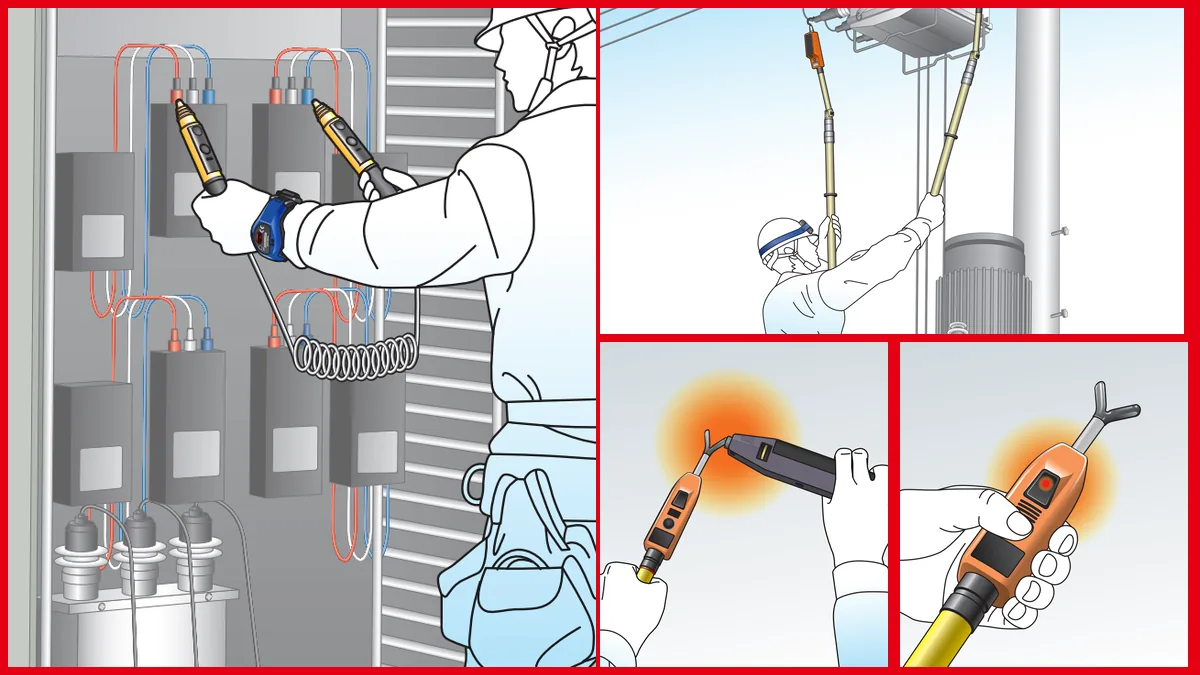
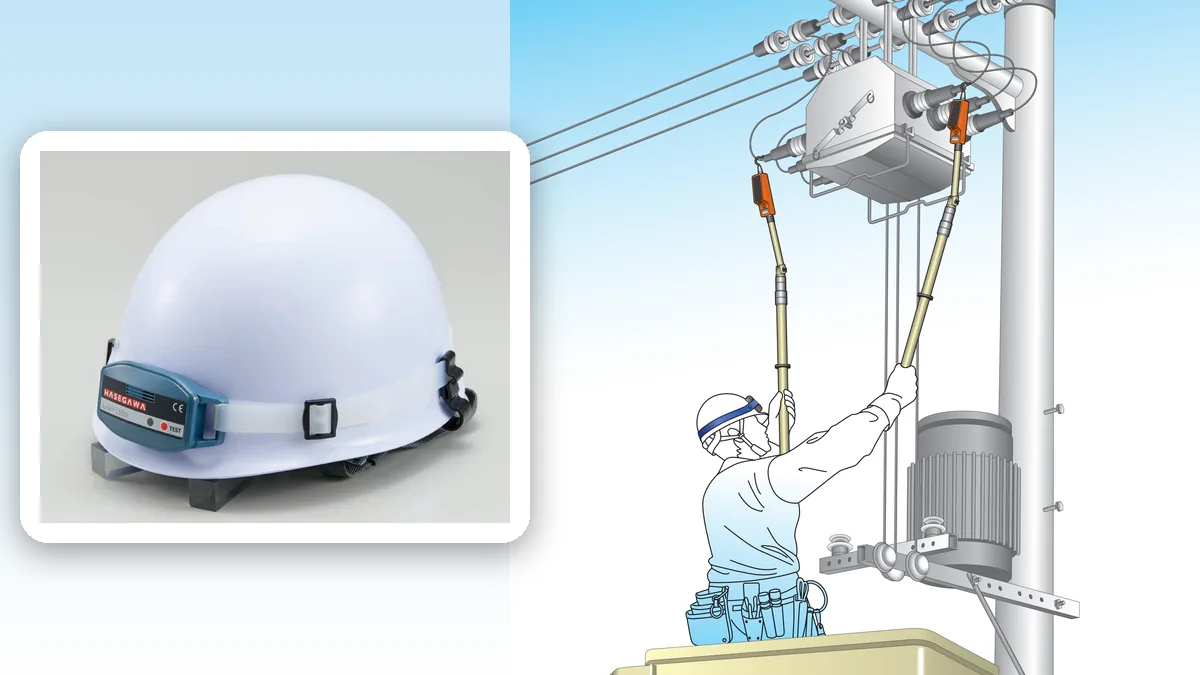
The standard applies to portable detectors with or without a built-in power source. A detector can take two forms: a complete device, as a single unit with its insulating element, or a separate device (universal-joint type) fitted to a separate insulating stick. In the second case the stick itself is not covered by this standard.
The exclusions are also important:
- Other, non-capacitive detector types, and self-ranging detectors (formerly called multi-range detectors), are not covered by this standard.
- The standard covers detectors that work by contact with the bare part being tested. The 2021 edition makes this explicit: on painted or coated conductors, the coating behaves like a capacitor whose value varies with thickness, affecting the threshold voltage and leading to incorrect indications.
- There are restrictions on use in switchgear designed to the IEC 62271 series, on electric railway overhead lines and in systems without a neutral reference.
- Unless stated otherwise, voltages in the standard are phase-to-phase values in three-phase systems.
The standard also stresses that safety depends on trained personnel following the working method with the stick and the instructions for use. In other words, a compliant device does not replace the correct procedure.
Which parts make up the IEC 61243 series?
The parts of the series, titled "Live working – Voltage detectors", are divided by technology and voltage level:
| Part | Scope | Current status (as of October 2026) |
|---|---|---|
| IEC 61243-1 | Capacitive type, 1 kV – 800 kV AC | 3rd edition, 2021 |
| IEC 61243-2 | Resistive type, 1 kV – 36 kV AC | 1995 edition, consolidated with the 1999 and 2002 amendments |
| IEC 61243-3 | Two-pole low-voltage type, up to AC 1000 V and DC 1500 V | 3rd edition, 2014 |
| IEC 61243-5 | Voltage detecting systems (VDS) | Withdrawn in 2021; content moved to IEC 62271-213:2021 |
| IEC TR 61243-6 | Guidance on non-contact voltage detectors above 1 kV (technical report) | 1st edition, 2017 |
Two-pole detectors used to check for "dead" at low voltage fall under Part 3. We discuss how these differ from the voltage tester pens they are often confused with in a separate article; for the basic differences between contact and non-contact detection, see contact vs non-contact voltage detectors.
How is IEC 61243-1 adopted in Europe?
IEC 61243-1:2021 has been adopted by CENELEC as EN IEC 61243-1:2021 and is published by national standards bodies under their own prefixes; in Germany, for example, as DIN EN IEC 61243-1:2022-12. When drafting a tender specification or reviewing a declaration of conformity, always confirm the current number and edition year in your national catalogue: there are significant technical differences between the 2003 and 2021 editions.
What does the standard guarantee in the field?
The table of contents of IEC 61243-1 clearly lists the functions expected of a detector. The headings most meaningful for users are the following.
Clear indication and perceptibility
At the centre of the standard is the concept of "clear indication": above the threshold voltage, the detector must show the "voltage present" state unambiguously. The perceptibility of visual and audible indications is measured in separate tests. Detectors are classified by indication group (I, II or III), and these groups are defined more precisely in the 2021 edition. The same edition added requirements and tests for the "ready to operate" and "stand-by" states. The practical result: the user must be able to tell clearly that the device is switched on, ready and capable of giving a warning.
Climatic category
The dependence of the indication on temperature and humidity is also defined in the standard. Detectors are marked with climatic category C, N or W. Of these, N (normal) corresponds to a temperature range of −25 °C … +55 °C and relative humidity of 20 % – 96 %. Teams working outdoors in winter or in hot climates should compare the climatic category on the device label with their working conditions.
Interference fields, categories L and S
Inside switchgear, adjacent phases or parallel lines can affect the detector. The standard tests the influence of in-phase and phase-opposition interference fields and of interference voltage with separate test arrangements, and the 2021 edition clarified the marking of detectors with low interference voltage. Manufacturer literature explains this behaviour through two categories: category L (line), with a short tip, is designed for overhead lines, while category S (switchgear), with a contact electrode extension, is designed for switchgear installations because it is resistant to interference fields.
Test element and pre-use check
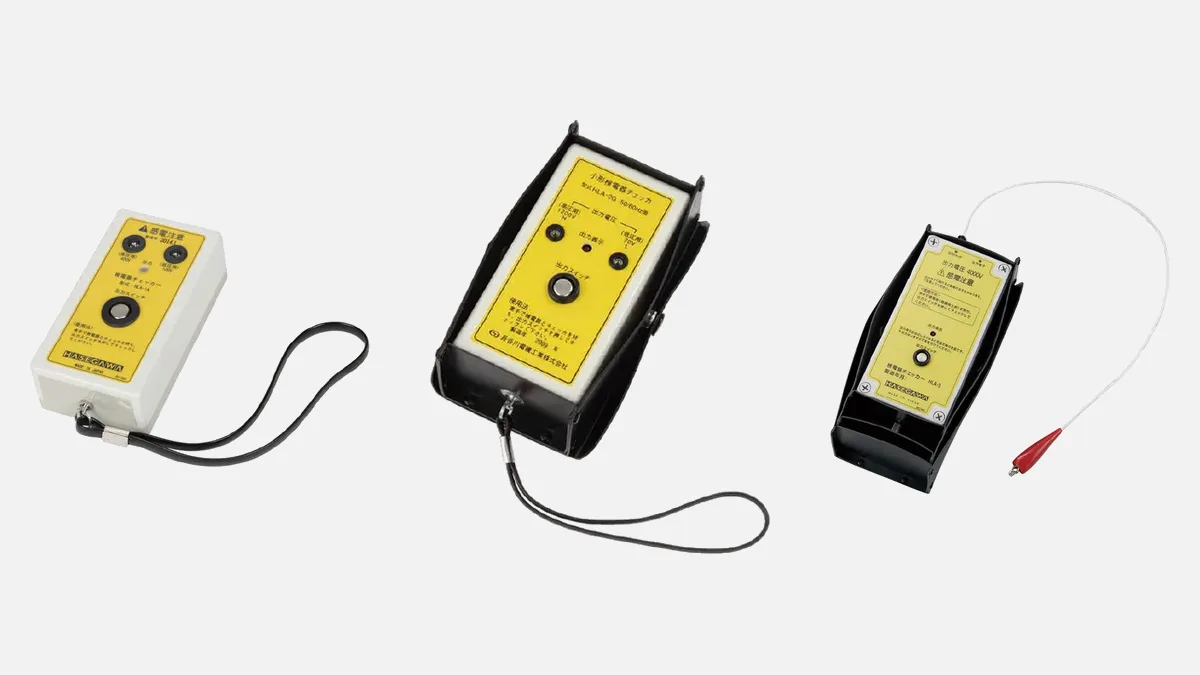
The standard contains clauses on the detector having a test element and on checking that element by test. For example, a railway operator's detector specification in Australia requires the self-test function to show that the detector is working correctly immediately before and immediately after each measurement. Detectors without a self-test element are tested on a part of the installation known to be live. Checking with a voltage detector tester on site is also common practice.
Other important clauses
- Non-response to DC voltage, response time and frequency dependence
- Reliability of the power source and continuous operating time
- Protection against bridging and spark resistance
- Vibration, drop and impact resistance
- Electromagnetic compatibility (EMC) requirements, added in 2021
- Prevention of foreseeable misuse in devices with a voltage/frequency selector
- The double-triangle symbol (IEC 60417-5216) indicating suitability for live working
How often should periodic inspection be carried out?
IEC 61243-1 contains an informative annex (Annex G) on maintenance and testing during use. The test interval, however, varies with frequency of use, environmental conditions and how the device is transported. For example, one German manufacturer, referring to the rules in its country, recommends a maintenance test at least every 6 years covering leakage current, clear indication and bridging protection. In practice the interval is set by the manufacturer's instructions and your organisation's risk assessment. We cover the topic in detail in our article on periodic inspection of voltage detectors.
Checklist before buying
- Standard number and edition year on the label or documentation (2003 or 2021?)
- Does the nominal voltage range cover your network (for example 20 kV or 33 kV)?
- Complete device or separate device; if separate, is your stick compatible?
- Category L or S, climatic category and indication group
- Audible and visual warning, self-test function
- Double-triangle symbol and instructions for use in your language
- Which body issued the type test report (IEC does not issue certificates of conformity; this service is provided by independent bodies)
IEC 61243-1 in HASEGAWA detectors
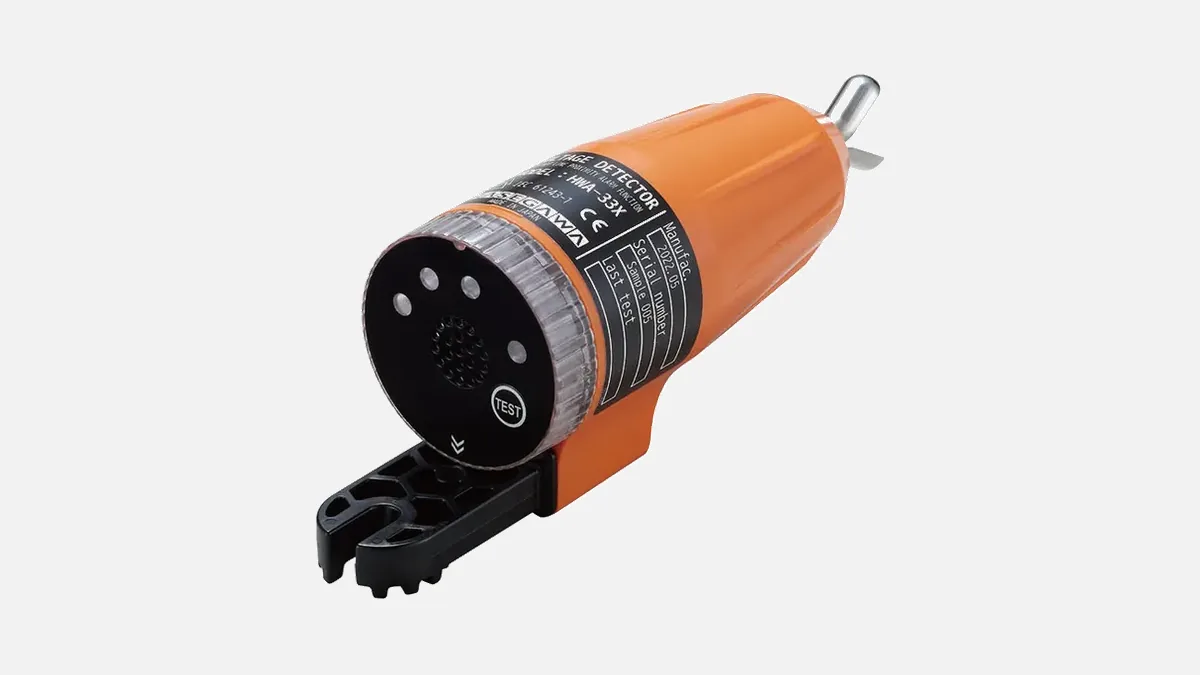
Among HASEGAWA product data, the most comprehensive reference to IEC 61243-1 is for the HWA-33X. For HWA-33X, the stated standard is IEC 61243-1, climatic category N (−25 °C … +55 °C, 20 % – 96 % relative humidity) and indication group III. The device operates in the range AC 11 kV – 33 kV; its operation test checks the battery level and indicators, and it gives a separate fault indication in the event of an abnormality.
The data for the HWB-35, HWB-110, HWB-138, HWB-550 and HWB-550A state impact resistance by the pendulum method according to IEC 61243-1. One detail is worth pointing out: in the 2021 edition the former pendulum-method annex was removed and replaced by a reference to IEC 60068-2-75. We recommend asking at the quotation stage which edition of the standard the test was carried out to. You can see all options in the universal-joint high-voltage detectors category. For model selection by voltage level, see also our voltage detector selection guide.
Related guides: voltage tester pen vs voltage detector, the five safety rules for electrical work.
Frequently Asked Questions
Does IEC 61243-1 apply to low-voltage detectors? No. Part 1 is for AC systems above 1 kV. Two-pole low-voltage detectors used up to AC 1000 V and DC 1500 V fall under IEC 61243-3.
Can an IEC 61243-1 detector be used on a painted or coated conductor? The 2021 edition states explicitly that for these detectors only contact with the bare part is reliable. A coating can change the threshold voltage and cause an incorrect indication.
Can a non-contact detector comply with IEC 61243-1? Part 1 covers contact-type capacitive detectors. For non-contact detectors above 1 kV, IEC has a separate technical report (IEC TR 61243-6:2017).
How can I tell whether a detector complies with the standard? Look at the marking on the device, the edition year of the standard and a type test report from an independent laboratory. IEC itself does not issue certificates of conformity.
For help choosing an IEC 61243-1-referenced detector suited to your network, contact us via the quote form.
Sources
- IEC 61243-1:2021 – IEC Webstore
- IEC 61243-1:2021 preview (contents, scope, changes) – VDE Verlag
- IEC 61243-2 consolidated version – IEC Webstore
- IEC 61243-3:2014 – IEC Webstore
- IEC 61243-5:1997 (withdrawn) – IEC Webstore
- IEC TR 61243-6:2017 – IEC Webstore
- DIN EN IEC 61243-1:2022-12 – DIN Media
- Voltage Detectors brochure (L/S categories, test element, maintenance test) – DEHN
- EP 15 00 00 01 SP HV AC Voltage Detector specification (climatic category N, indication group) – Transport for NSW