Contact vs Non-Contact Voltage Detectors: Key Differences

From pen-type non-contact detectors to hot stick high-voltage detectors and fixed voltage indicators, each technology meets a different need. We explain which one to choose and when.
One of the first questions when choosing a voltage detector is: contact or non-contact? Both technologies detect the presence of voltage, but their operating principles, working distances and the sites they suit are different.
How does a non-contact voltage detector work?
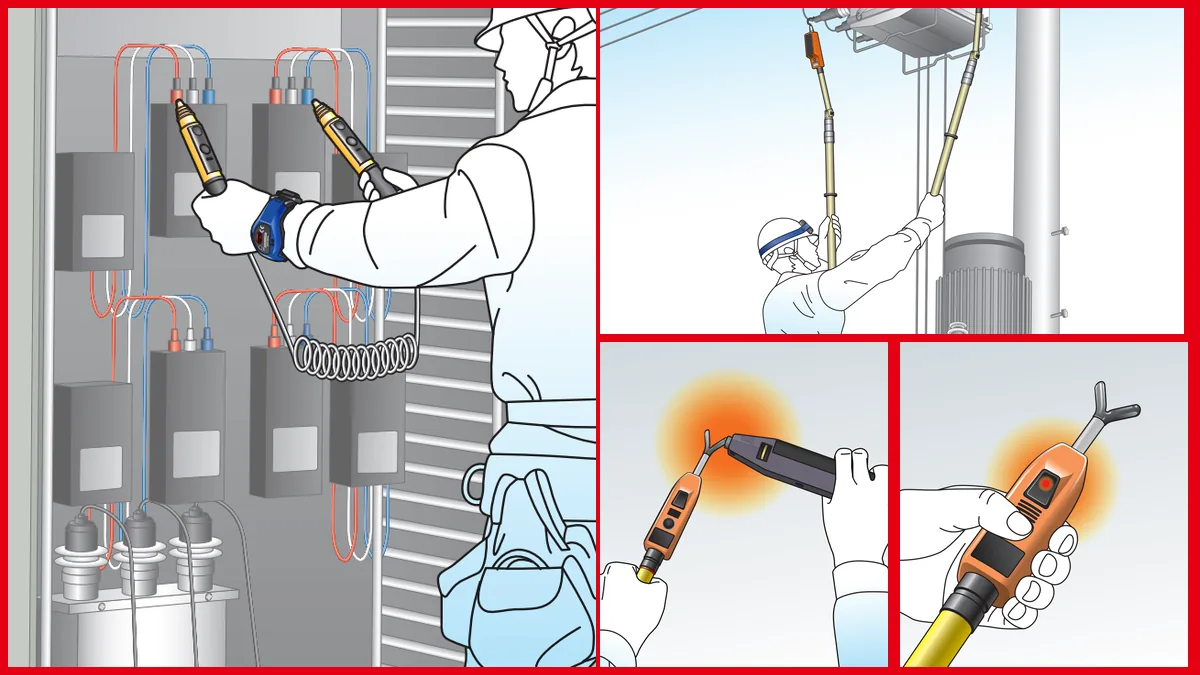
Non-contact detectors sense the electric field around a live AC conductor. There is no need to touch the insulation or the metal part; the detector gives an audible and visual warning when brought close to the conductor.
- Advantages: fast checks, easy use on insulated cables, distance that reduces arc risk.
- Points to watch: screened (shielded) cables, metal conduits or strong ambient fields can affect the result.
Pen-type models are common at low voltage. For example, the HASEGAWA HTE-610W is a new-generation low-voltage detector operating from AC 50 V – 1000 V. All models: low-voltage detectors.
How does a contact voltage detector work?
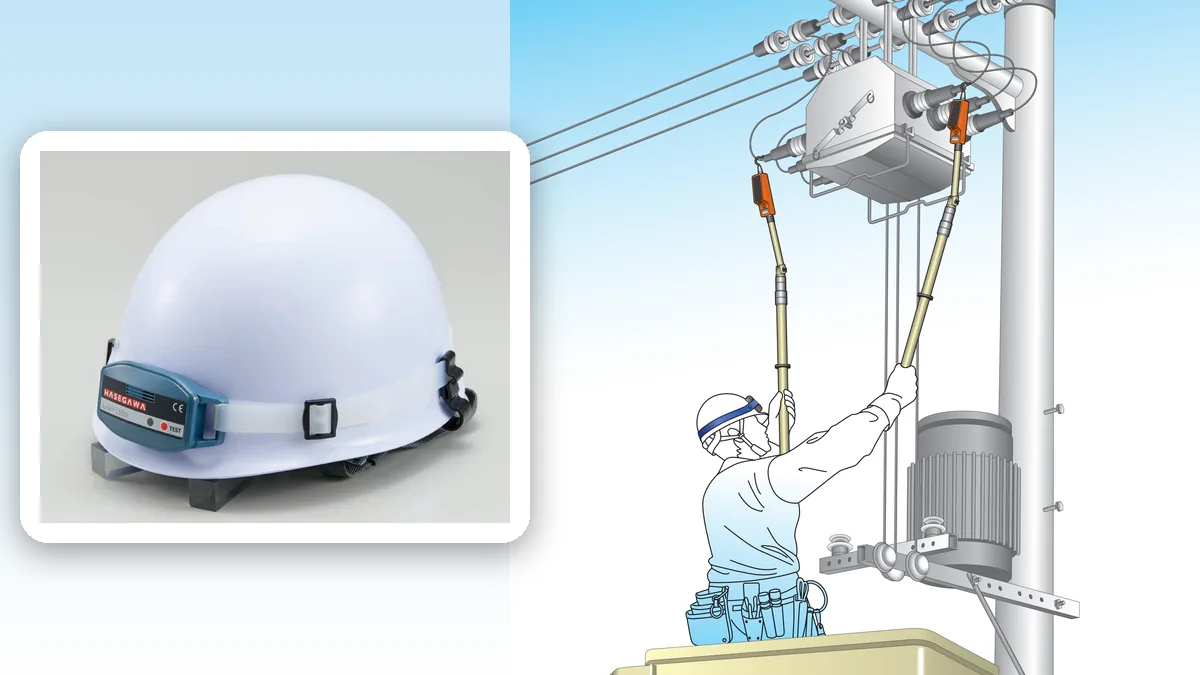
Contact (hot stick) detectors are used by touching the tip to the conductor. At medium and high voltage they are used with an insulating stick that keeps a safe distance between the worker and the conductor.
- Advantages: a clear, selective result on a specific conductor; designs suited to high voltage classes.
- Points to watch: stick length and insulation class must match the system voltage.
Example: HST-70 (AC 20 kV – 80.5 kV). Other options: hot stick high-voltage detectors and universal-joint high-voltage detectors.
Fixed voltage indicators
Some installations need continuous monitoring of whether voltage is present. Fixed indicators and warning devices such as Voltect detect voltage without contact in substations, on transmission lines and at customer installations (AC 3.3 kV – 550 kV), keeping personnel continuously informed. See Voltect voltage indicators.
Comparison table
| Feature | Non-contact (handheld) | Contact (hot stick) | Fixed indicator |
|---|---|---|---|
| Operating principle | Electric field sensing | Contact with conductor | Electric field sensing |
| Typical voltage | Low voltage | Medium / high voltage | Medium / high voltage |
| How it is used | Handheld, quick check | On a stick, selective check | Permanently mounted, continuous monitoring |
| Key benefit | Speed and convenience | Definitive per-conductor result | 24/7 warning |
Which should I choose?
- For quick checks on panels, sockets, lighting and low-voltage cables: a non-contact low-voltage detector.
- To verify that medium-voltage cubicles, overhead lines and substations are dead: a contact / hot stick detector rated for the system voltage.
- For continuous warning at an installation: a fixed voltage indicator.
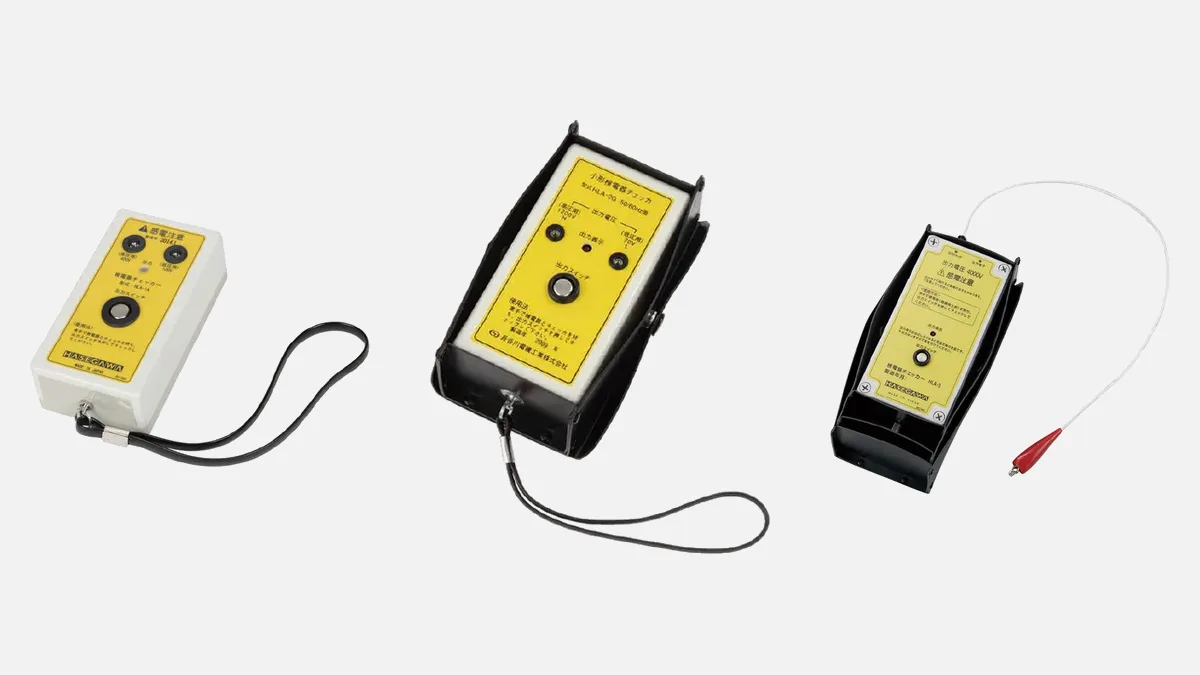
Whichever technology you choose, the detector must be tested before use and at regular intervals. For details, see our article on periodic inspection and our voltage detector testers. For general selection criteria, read our guide to choosing a voltage detector.
Frequently Asked Questions
If a non-contact detector shows "no voltage", is the line safe?
Not on its own. The absence of voltage must be verified with a detector rated for the system voltage, and the line must then be earthed.
Does a non-contact detector detect DC voltage?
Non-contact detectors that work on the electric-field principle are designed for AC voltage. For DC systems, use detectors made for that purpose.