Voltage Safety Kit for Field Crews: From the HXW-6W Wrist Alarm to Voltage Detectors
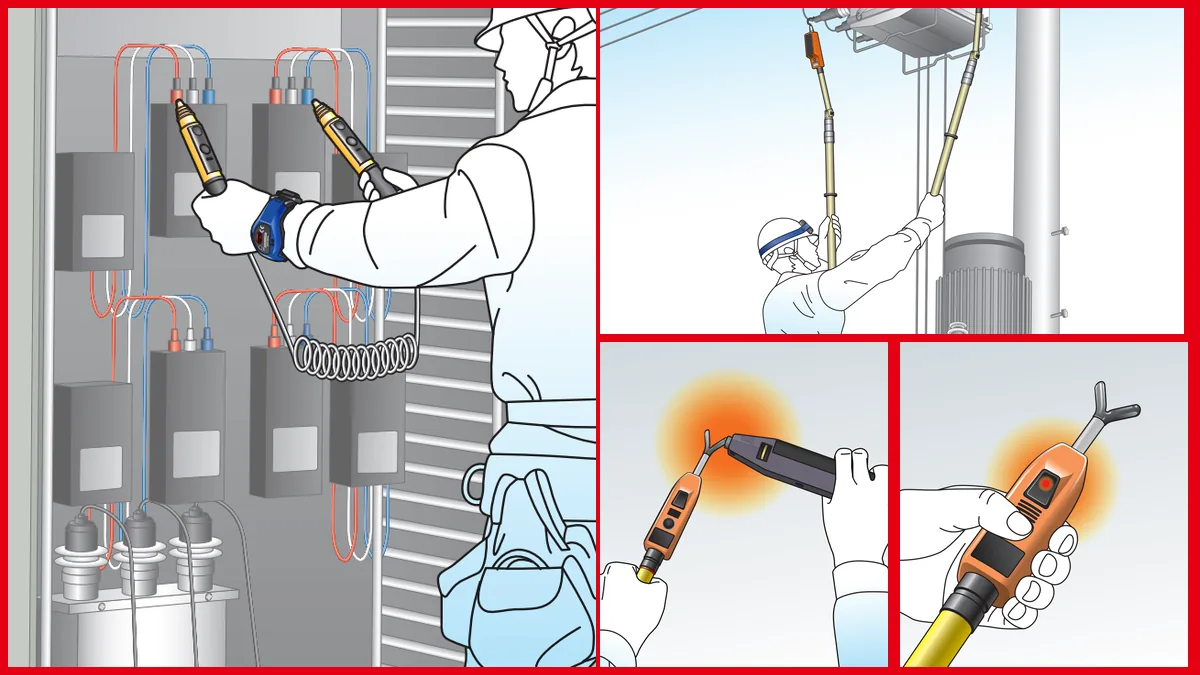
A voltage safety kit for MV switchgear, overhead line and LV panel work: how the HXW-6W wrist alarm, HXA helmet alarm, HWA-33X, HTE-610W and HTE-700D work together.
A distribution crew rarely does one kind of job a day: switchgear maintenance in the morning, a pole-top fault after lunch, a low-voltage panel check before the end of the shift. Each environment carries a different risk and no single device covers them all. A voltage safety kit for field crews is the planned combination of devices that warn workers about live parts and prove absence of voltage across those different jobs.
This guide describes a practical kit built from HASEGAWA products, organised by type of work. At its centre is the HXW-6W, a wrist-worn voltage detection alarm designed for medium-voltage switchgear work.
Two different jobs: warning and verifying
The devices in the kit do two different things, and one never replaces the other:
- Proximity alarms (warning): worn throughout the job, they warn when the worker unknowingly approaches a live part. The wrist-worn HXW-6W and the helmet-mounted HXA Series belong here.
- Voltage detectors (verification): used before work starts to prove that the work location is dead. The HWA-33X, HTE-610W and HTE-700D belong here.
A silent proximity alarm does not mean "dead"; absence of voltage is always verified with a detector, as the fourth of the five safety rules requires. After verification, neighbouring panels and parallel circuits may still be live, so the alarm stays on. Together they add two independent layers against human error.
What is in the kit
| Work environment | Warning (worn) | Verification (before work) |
|---|---|---|
| MV switchgear and panels | HXW-6W wrist alarm | MV detector rated for the system voltage |
| Overhead lines, pole top | HXA-6S / HXA-30S helmet alarm | HWA-33X (11 – 33 kV) |
| LV panels, insulated cable | — | HTE-610W / HTE-610WL |
| LV bare conductors, AC/DC | — | HTE-700D/700DL |
1. MV switchgear: the HXW-6W wrist alarm
In MV switchgear the work is done by hand, and the hand usually reaches a live part before the head does. A live busbar or an energised neighbouring panel may sit right next to the isolated feeder; opening the wrong panel or assuming a section is dead is among the most serious mistakes in the field.
The HXW-6W is a wrist-worn voltage detection alarm built for this risk:
- Operating range AC 1 kV – 42 kV, covering the 10 kV, 20 kV and 33 kV networks common across Europe.
- Early warning. On a 6.6 kV system it starts at about 60 cm, with an audible warning of at least 65 dB at 60 cm. Theoretical values give about 0.8 m at 11 kV, 1.1 m at 22 kV and 1.3 m at 33 kV.
- Values printed on the body. Voltage–distance values are printed on the unit, so workers can recall them before starting.
- Hands-free. Worn like a watch; the warning continues while tools are held.
- One CR1620 battery, about 15 hours of continuous operation from new.
Wearing it correctly
The HXW-6W's sensitivity is directional: detection is easiest towards the fingertips and the sides, and shorter towards the palm. In switchgear the hand usually leads with the fingertips, so the warning comes from the point closest to the hazard. Wear it on the wrist of the working hand and tighten the strap so it does not slide.
HXW-6W or HXW-6WL?
If the crew works only in MV switchgear, the HXW-6W is the right choice. If warnings are also needed in LV panels, the HXW-6WL (AC 400 V – 22 kV) is worth considering, although it does not cover 33 kV switchgear. For a detailed comparison see the Wrist Voltage Proximity Alarm guide, and for the full sequence of a switchgear job see Safe Working in MV Switchgear.
2. Overhead lines: HXA helmet alarm and HWA-33X
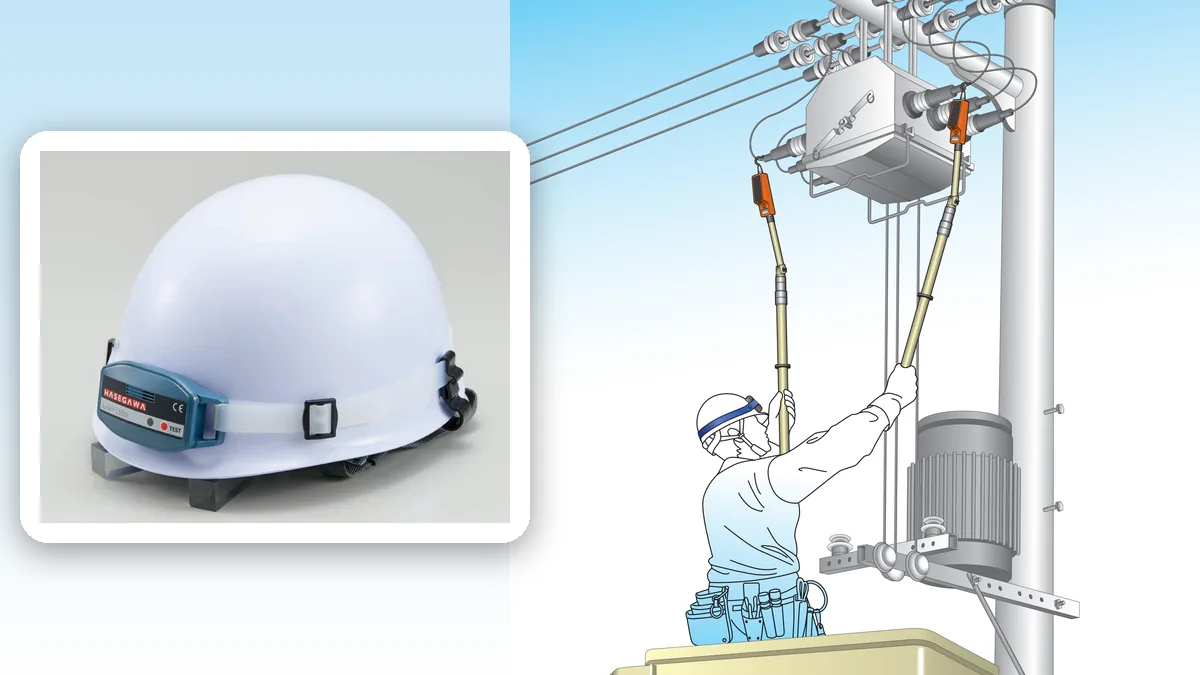
On a pole top, with both hands busy, the head and shoulders are what most often come close to the conductor, so overhead crews wear the proximity alarm on the helmet.
- HXA Series helmet alarm: audible plus flashing LED warning, IP67 dust and water protection, always-on standby with no power switch and about a year on standby from one CR2032. The HXA-6S covers 10, 20 and 33 kV lines, the HXA-30S 11 – 66 kV and the HXA-70S 66 – 110 kV. See our helmet-mounted proximity alarm guide.
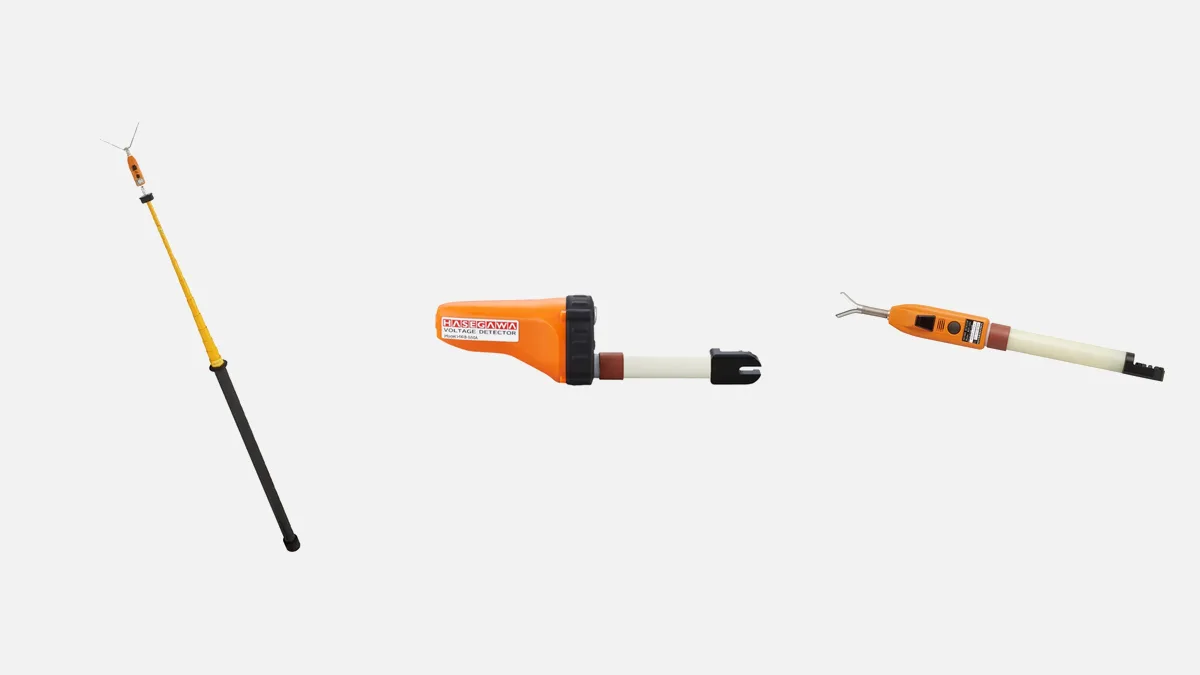
- HWA-33X proximity-warning voltage detector: designed to IEC 61243-1:2021, working from AC 11 kV to 33 kV and attached to an operating pole by a universal joint. It warns in two stages on approach (about 60 cm and 30 cm at 11 kV) and confirms a live part on contact with three red LEDs and a continuous tone. Hook, straight and Y-shaped tips are available, and its IPX4-equivalent design allows use in rain. Note that its range starts at 11 kV, so it suits 20 kV and 33 kV networks rather than 10 kV.
The two work as a pair: the HWA-33X proves the line is dead, and the HXA helmet alarm keeps warning about neighbouring live circuits for the rest of the job.
3. LV panels: HTE-610W and HTE-700D
On the low-voltage side there are two different verification needs:
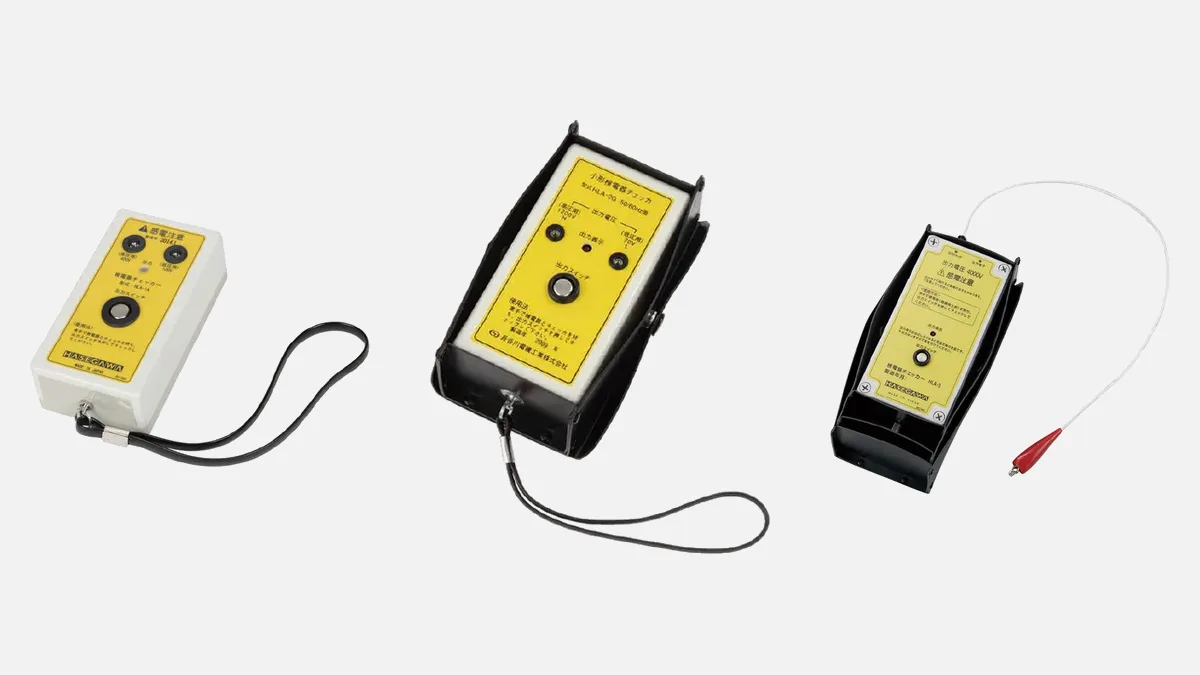
- Insulated cable and panel checks: the HTE-610W is a pen-type detector with adjustable sensitivity that detects AC 50 V – 1000 V through cable insulation (CAT III 1000 V equivalent, 22 g). The HTE-610WL adds a built-in LED torch that switches off automatically after about 30 seconds, useful in dark cabinets.
- Bare conductors, AC and DC: the HTE-700D/700DL detects AC 50 – 600 V and DC 12 – 750 V and is IPX4-equivalent. Its conductive resin tip reduces the risk of short circuits. It is for bare conductors only, and DC detection needs an earth lead. The DL version adds an LED light.
Daily routine for the kit
- Pre-job checks. Test the proximity alarms with their test buttons; prove voltage detectors with their self-test or a voltage detector tester.
- Alarm on first. The HXW-6W goes on the wrist and the HXA on the helmet before a panel door is opened or a pole is climbed.
- Verify absence of voltage at the work location with the right detector, then earth and short-circuit and secure against reclosing.
- Stop when an alarm sounds. Step back and identify the live part again.
- Track batteries. Keep spares in the crew kit: CR1620 for the HXW-6W, CR2032 for the HXA, 2 × AAA for the HWA-33X, 2 × LR44 for the HTE-610W and 1 × AAA for the HTE-700D.
Which kit for which crew?
| Crew | Suggested kit |
|---|---|
| MV switchgear maintenance and commissioning | HXW-6W + suitable MV detector + HTE-610W |
| Distribution line faults and maintenance (20–33 kV) | HXA-6S + HWA-33X + HTE-610W |
| Substation operation | HXW-6W + HXA-30S + HWA-33X |
| LV panels and industrial maintenance | HTE-610W or HTE-610WL + HTE-700D (AC/DC) |
Frequently Asked Questions
Can a wrist alarm and a helmet alarm be used together?
Yes. They cover risks to different parts of the body, so many crews use both: the HXW-6W wrist alarm inside switchgear and the HXA helmet alarm on the pole.
Does the HXW-6W work in 20 kV and 33 kV switchgear?
Yes. The HXW-6W operates from AC 1 kV to 42 kV and covers 10 kV, 20 kV and 33 kV systems.
If we have proximity alarms, do we still need voltage detectors?
Yes. A proximity alarm only warns; it does not prove absence of voltage. Before work starts, absence of voltage must be verified with a suitable voltage detector.
What is the difference between the HTE-610W and the HTE-700D?
The HTE-610W detects AC 50 – 1000 V through cable insulation and has adjustable sensitivity. The HTE-700D works on bare conductors only, detects DC 12 – 750 V as well as AC 50 – 600 V and is IPX4-equivalent.
Describe your crews' tasks and voltage levels in our quotation form and we will plan a kit around the HXW-6W with the right quantities. HASEGAWA Türkiye, the official distributor in Türkiye, supplies genuine HASEGAWA equipment to customers across Europe.
Sources
- HASEGAWA HXW-6W, HXA Series, HWA-33X, HTE-610W/610WL and HTE-700D/700DL technical data (manufacturer)
- IEC 61243-1:2021 Live working – Voltage detectors – Part 1 (IEC Webstore)