Wrist-Worn Voltage Proximity Alarms: What They Are and How to Choose
A wrist-worn proximity alarm senses the electric field of a live conductor and warns the wearer. How it works, its limits, choosing HXW-6W or HXW-6WL, and a daily site routine.
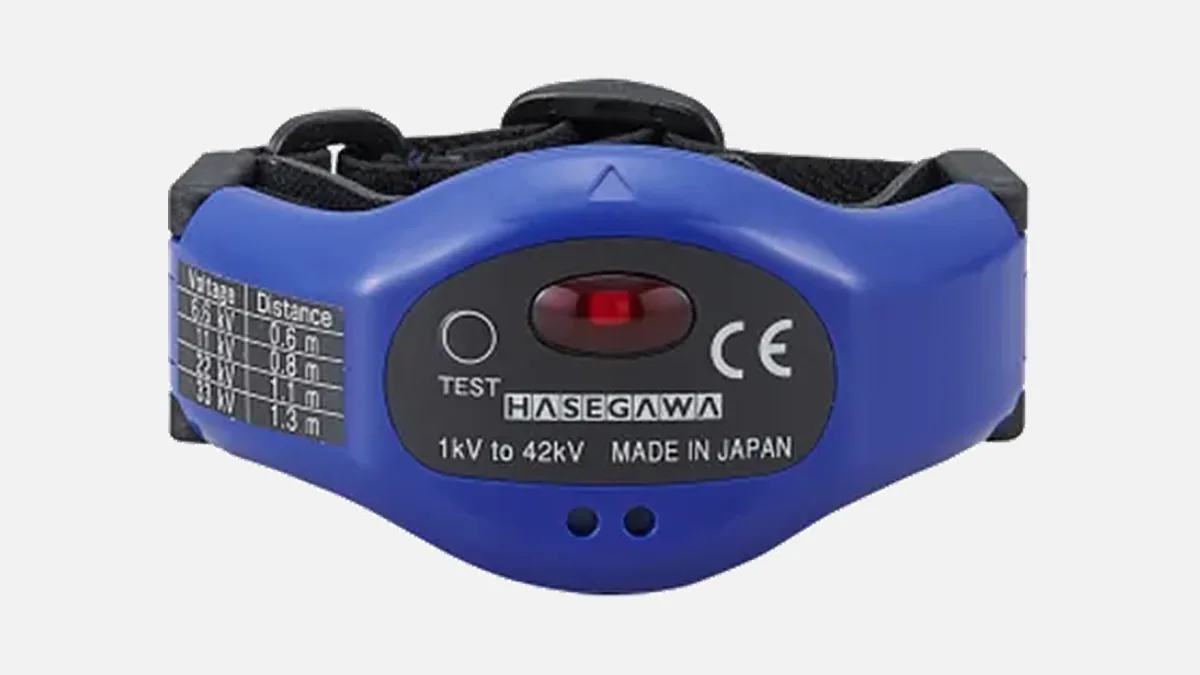
A wrist-worn voltage proximity alarm is a personal safety device, worn on the wrist like a watch, that senses the electric field around a live conductor without contact and gives the wearer an audible warning. The right model is chosen according to the lowest voltage level you will work on. However, the device is only a supplementary warning: it does not prove that a line is dead. That must always be verified with a suitable voltage detector.
We covered the general principle of proximity alarms and compared wrist, arm and helmet types in our guide What Is a Proximity Alarm?. This article focuses only on the wrist type: how it detects, what it cannot detect, how to choose one and how to use it on site.
What does a wrist-worn proximity alarm do?
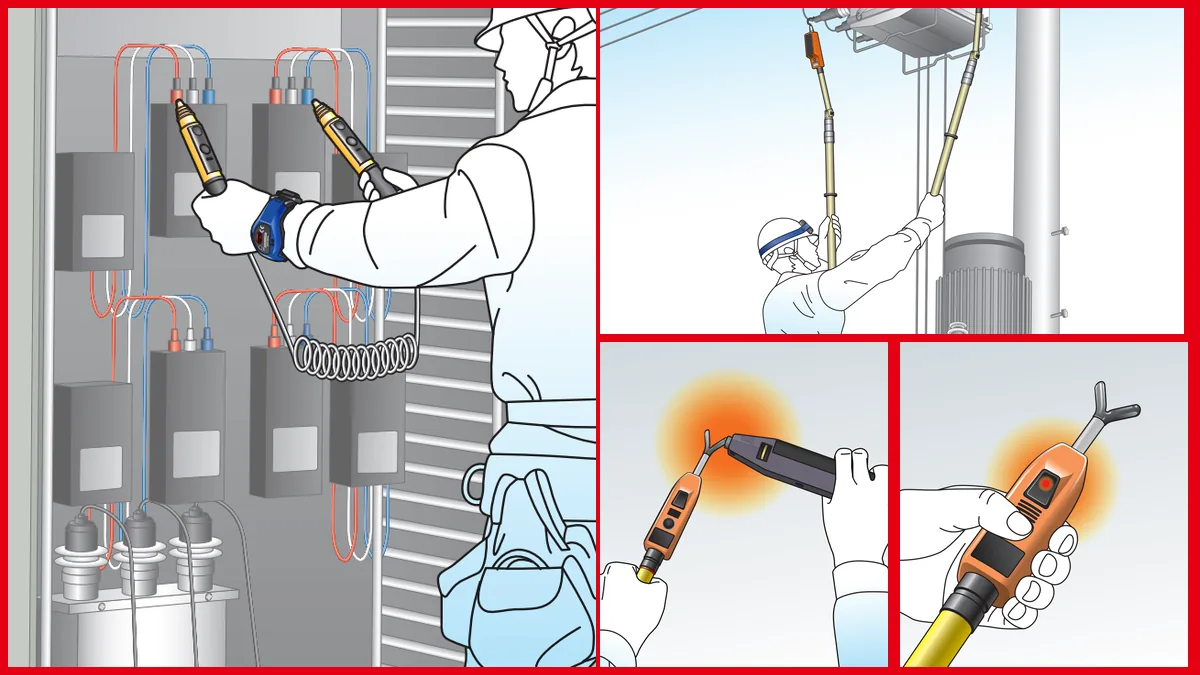
In switchgear, panels and distribution installations, much of the work is done by hand. Right next to the de-energised section there may be a live busbar, a cable termination or an adjacent feeder. A wrist-worn alarm is designed to catch the moment when a hand unknowingly approaches these live parts. Because the device sits on the wrist, the warning comes from the limb that gets closest to the hazard, and it keeps working while the hands are holding tools.
For this reason a wrist-worn alarm should be thought of not as a measuring instrument but as an always-on layer of awareness. The core safety sequence (disconnect, lock off, verify absence of voltage, earth) is applied in full; the alarm is added on top of it.
How does electric field detection work?
Every conductor energised with alternating voltage produces an alternating electric field around it, proportional to its voltage to earth. The field becomes stronger as you approach the conductor. A wrist-worn alarm continuously monitors field strength and sounds a warning when a set threshold is exceeded. There is no need to touch the conductor or for current to flow through it; detection is entirely contactless.
This operating principle has three important practical consequences:
- The alarm distance is not fixed. As voltage rises, the field strengthens and the alarm starts from further away. The distances given by the manufacturer are defined for a specific voltage and standard conditions.
- The surroundings change the field. Earthed metal cubicle housings, partitions and nearby conductors can screen the field or change its direction. At the same voltage, the alarm may start at different distances in open space and inside a narrow cubicle.
- A source that does not radiate a field outwards is not detected. In cables with an earthed screen, the electric field stays largely inside the screen; if the alarm stays silent next to such a cable, that does not mean the cable is dead.
Why is it not proof of "dead"?
A silent wrist alarm can have several causes, and only one of them is "the line is dead". The other possibilities are:
- The battery is weak or flat.
- The line voltage is below the device's operating range.
- The conductor is screened by an earthed screen or housing.
- The system is outside the AC 50/60 Hz for which the device is specified (for example DC).
- The worker has not yet entered the alarm's starting distance.
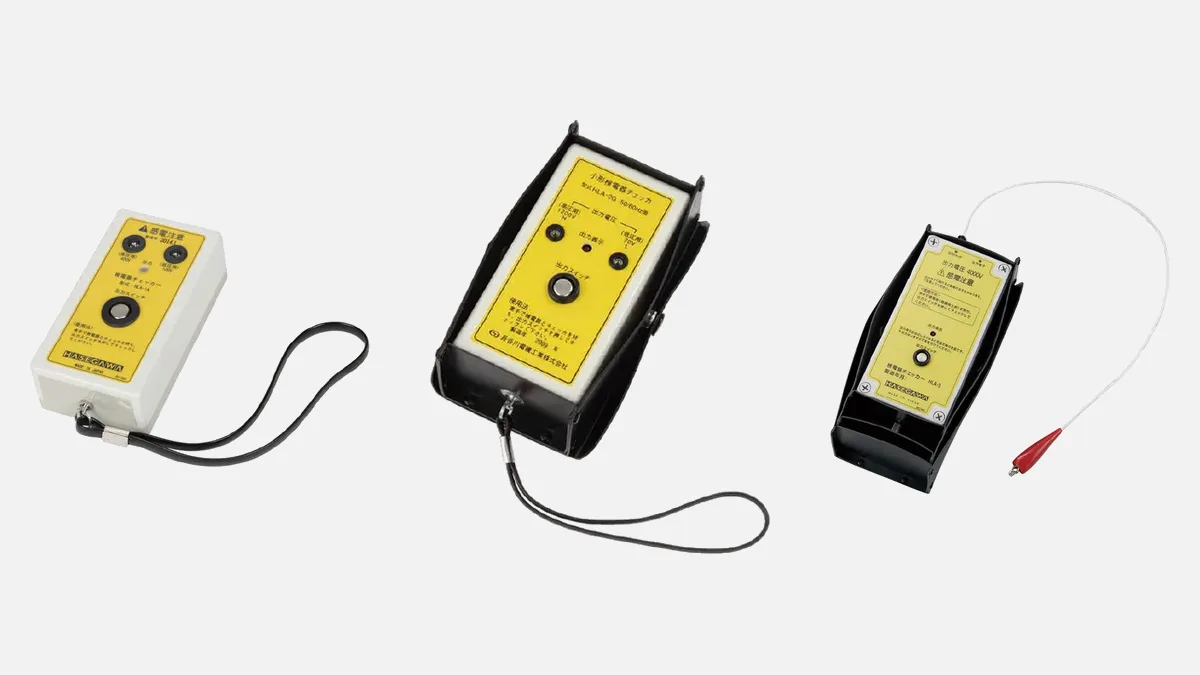
The absence of voltage must therefore be verified at the point of work with a voltage detector suited to that voltage level. This is also the third of the five safety rules set out in EN 50110-1. UK HSE guidance HSG85 likewise states that parts must be proved dead with a properly constructed voltage detector, tested before and after use, and does not recommend non-contact devices such as "volt sticks" for proving dead on low-voltage systems. The international reference for capacitive voltage detectors used on AC systems above 1 kV is IEC 61243-1. For the difference between contact and non-contact detectors, see our article Contact vs Non-Contact Voltage Detectors.
How to choose a wrist-worn alarm
The basic selection rule is simple: the device's operating range must cover the lowest voltage you will encounter on site. The upper limit matters too; the device's behaviour is not defined at voltages outside its range. Once you have established these two limits, consider the working environment (LV panels or MV switchgear) and how long the device will be in use.
HASEGAWA's wrist-worn proximity alarm family, known as the HXW-6 series, has two models:
| HXW-6W | HXW-6WL | |
|---|---|---|
| Operating voltage | AC 1 kV – 42 kV | AC 400 V – 22 kV |
| Standard alarm distance | approx. 60 cm on a 6.6 kV line | approx. 25 cm on a 400 V line |
| Theoretical alarm distance at 6.6 kV | 0.6 m | 1.0 m |
| Theoretical alarm distance at 22 kV | 1.1 m | 1.9 m |
| Frequency | 50/60 Hz | 50/60 Hz |
| Sound level | at least 65 dB at 60 cm | at least 65 dB at 60 cm |
| Battery | CR1620 (3 V) × 1 | CR1620 (3 V) × 1 |
| Operating temperature | −10 °C … +40 °C | −10 °C … +40 °C |
| Typical use | MV switchgear and panel work | LV panels and MV installations up to 22 kV |
When to choose HXW-6W
If your work is mainly in medium-voltage switchgear and installations above 1 kV, HXW-6W is the right choice. Its upper limit of 42 kV also covers 36 kV-class switchgear, such as 33 kV distribution networks. With a new battery it lasts approximately 15 hours in continuous operation and approximately 10 months on standby.
When to choose HXW-6WL
If the team also wants warnings in low-voltage panels, HXW-6WL stands out. Its range starts at AC 400 V, so it also responds in LV distribution panels. Its upper limit is 22 kV, so 33 kV installations fall outside its operating range.
A note for mixed sites
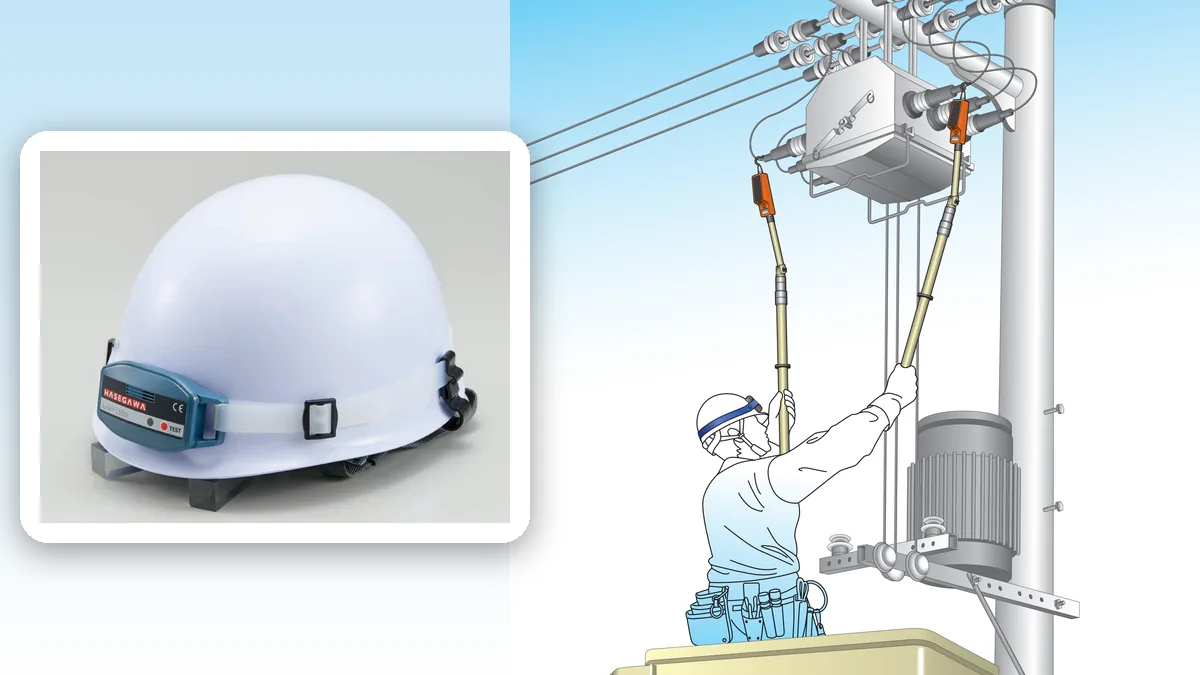
If the same team works both on 400 V panels and on 33 kV switchgear, no single model covers both ends. In that case, either keep both models and issue them according to the type of job, or choose according to the most frequent work and plan additional precautions for the other jobs. On networks of 20 kV, both models fall within their stated ranges. You can see all options on the wrist proximity alarms page. For overhead line and pole-top work, arm-mounted or helmet-mounted models are designed instead of wrist types.
Correct wearing, battery and daily check routine
The protection the device provides depends largely on how it is used. The following routine is a practical starting point on site:
- Check before starting work. Confirm that the device is working using the method described in the manufacturer's instructions. If no audible warning is produced, do not use the device.
- Change the battery on a schedule. Both models use a single CR1620 (3 V) button cell. Keep a spare battery in the team kit and track battery life against hours of use.
- Wear it on the working hand. The hand that will get closest to live parts is usually the one holding the tool. Wearing the alarm on that wrist gives an earlier warning.
- Keep it audible. In noisy installations and where hearing protection is worn, make sure the warning can be heard. The sound level is at least 65 dB at 60 cm.
- Stop when the alarm sounds. Do not dismiss the warning as a "false alarm". Stop, step back and re-identify the live parts.
- Respect the temperature limits. The devices are specified to operate between −10 °C and +40 °C; do not use them outside this range.
Common mistakes
- Using the alarm instead of a voltage detector. This is the most dangerous mistake. A silent alarm does not mean "dead".
- Choosing a model with the wrong range. It is easy to overlook that HXW-6W is outside its range on 400 V panels, and HXW-6WL on 33 kV switchgear.
- Relying on the alarm near screened cables. An earthed screen blocks the field; the alarm may stay silent at cable terminations and along screened cable routes.
- Neglecting the battery. A flat battery means a silent device, and silence creates a false sense of security.
- Leaving the device in the bag. A personal alarm only works when it is worn. Adding "alarm worn and working" to the permit-to-work and pre-job checklist is good practice.
Where do HASEGAWA products fit in?
A wrist-worn alarm is only one link in the safe working chain. You also need a voltage detector rated for the voltage level to verify absence of voltage, and earthing equipment to protect the de-energised section. HASEGAWA Türkiye is the official distributor of HASEGAWA Electric (Japan) products in Türkiye and supplies genuine HASEGAWA products to customers across Europe; we provide technical support in choosing between HXW-6W and HXW-6WL for your application.
Related guide: the five safety rules for electrical work.
Frequently Asked Questions
Does a wrist-worn voltage proximity alarm replace a voltage detector?
No. A wrist-worn alarm is a supplementary warning device. That a line is dead must be verified at the point of work with a voltage detector rated for the appropriate voltage level.
Which model should be used on 400 V panels?
HXW-6WL is suitable, because its operating range starts at AC 400 V. The operating range of HXW-6W starts at 1 kV.
Which model is suitable for 33 kV switchgear?
HXW-6W covers 33 kV with its range of AC 1 kV – 42 kV. The upper limit of HXW-6WL is 22 kV.
Why does the alarm sometimes sound at a shorter distance?
The alarm distance depends on the voltage level, the position of the conductor and nearby earthed structures. The manufacturer's values apply to standard conditions; in narrow cubicles and screened environments the distance can change.
To identify the right model for your application with us, write to us via the quote form.
Sources
- IEC 61243-1:2021 Live working – Voltage detectors – Part 1: Capacitive type to be used for voltages exceeding 1 kV a.c. (IEC Webstore)
- HSE – HSG85 Electricity at work: Safe working practices (3rd edition, 2013)
- HASEGAWA Electric HXW-6W / HXW-6WL product technical data (manufacturer data sheets)