What Is a Proximity Alarm? A Guide to Live-Line Proximity Warning
A proximity alarm is a personal warning device that sounds when you get dangerously close to a live conductor. We explain the differences between wrist, arm and helmet models and how to choose.
Many electrical accidents happen when a worker approaches a conductor without knowing, or noticing, that it is live. A proximity alarm (voltage proximity detector) is a body-worn warning device designed for exactly this risk. As soon as the wearer comes dangerously close to a live line, it gives a loud audible alarm (and, depending on the model, a visual one) to stop them. Wrist-worn models are also known as wrist voltage proximity alarms or wearable voltage detectors.
How does a proximity alarm work?
An electric field forms around live AC conductors. The proximity alarm senses the strength of this field: the closer the device gets to the conductor, the stronger the field, and once a set threshold is exceeded the alarm is triggered. The device never touches the conductor, so it can stay switched on throughout the job as a "second pair of eyes".
The distance at which the alarm triggers depends on the line voltage, the position of the conductor and other structures nearby. Always check which voltage range a model is designed for.
Wrist, arm or helmet: which is for what?
| Type | Typical use | HASEGAWA examples |
|---|---|---|
| Wrist type | Work inside switchgear cubicles and panels, low-voltage boards | HXW-6W (AC 1 kV – 42 kV), HXW-6WL (AC 400 V – 22 kV) |
| Arm type | Overhead line and pole-top work | HXA-6 (AC 6.6 kV – 33 kV), HXA-30 (AC 11 kV – 66 kV), HXA-70 (AC 66 kV – 110 kV) |
| Helmet type | Overhead lines, hands-free work | HXA-6S, HXA-30S, HXA-70S |
Wrist-type voltage proximity alarms
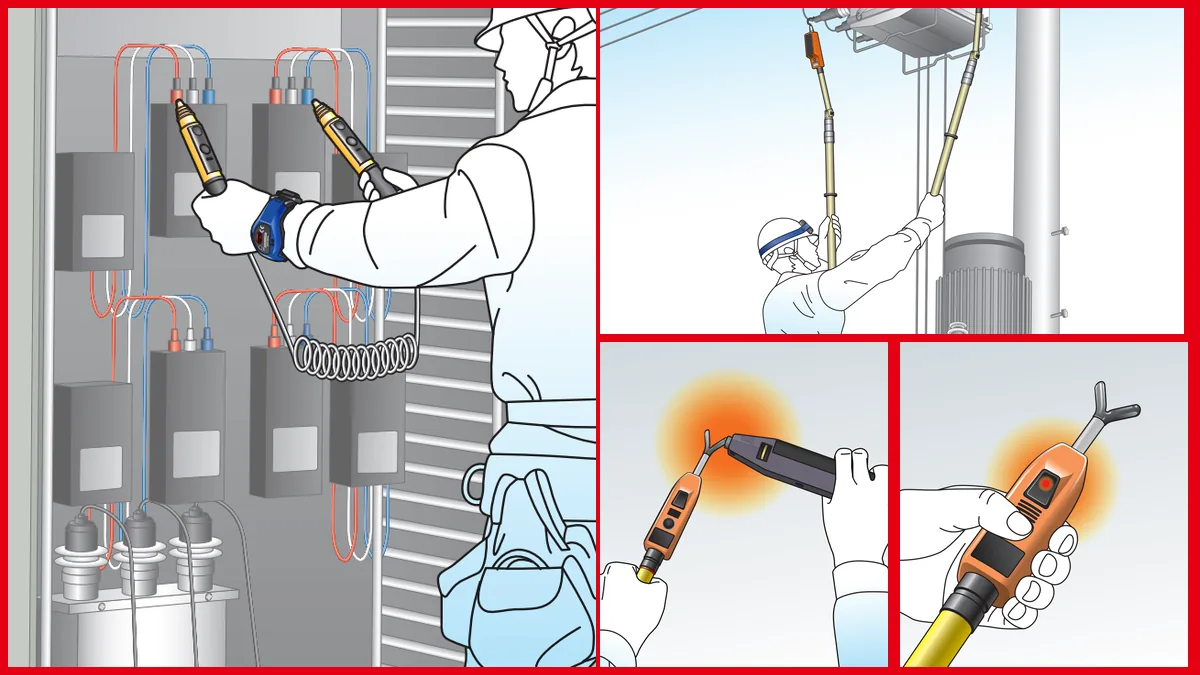
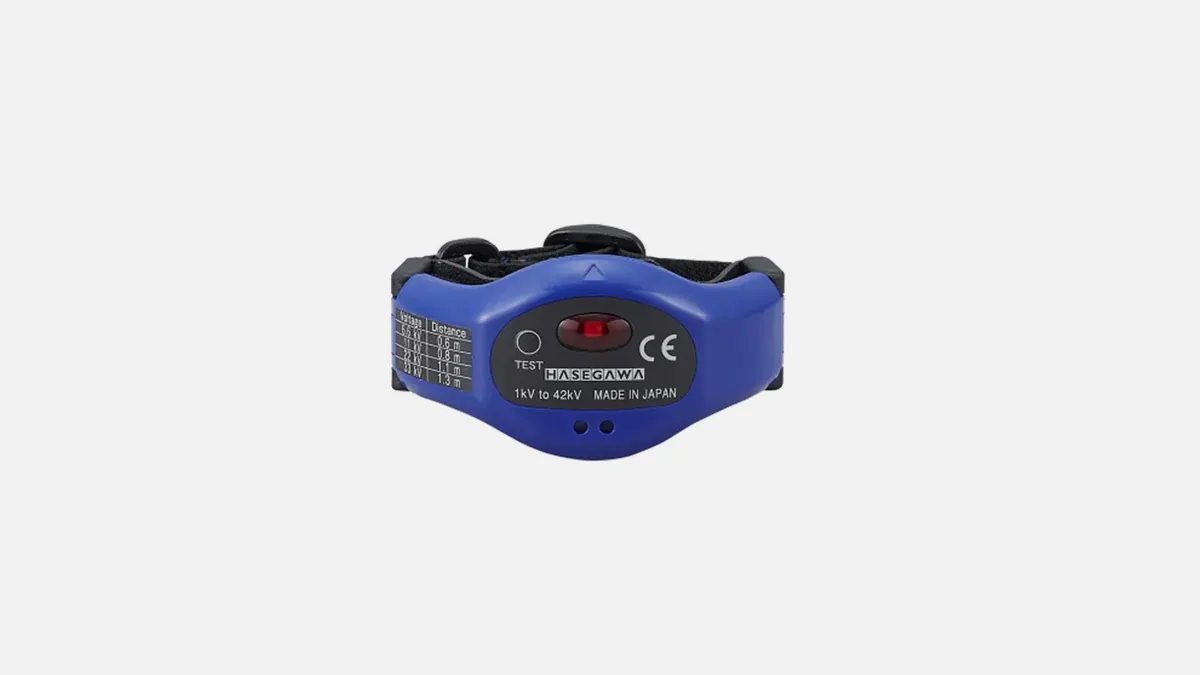
The hands are the part of the body that gets closest to live parts. Wrist models are therefore the usual choice in distribution cubicles, substations and work inside panels. The HASEGAWA range has two models: HXW-6W for medium-voltage cubicles (AC 1 kV – 42 kV; alarms at approx. 60 cm at 6.6 kV) and HXW-6WL, which is also sensitive to low voltage (AC 400 V – 22 kV; alarms at approx. 25 cm at 400 V). The lowest voltage you will work on decides which one to choose. You can compare all models on the wrist proximity alarms page.
Arm-type proximity alarms
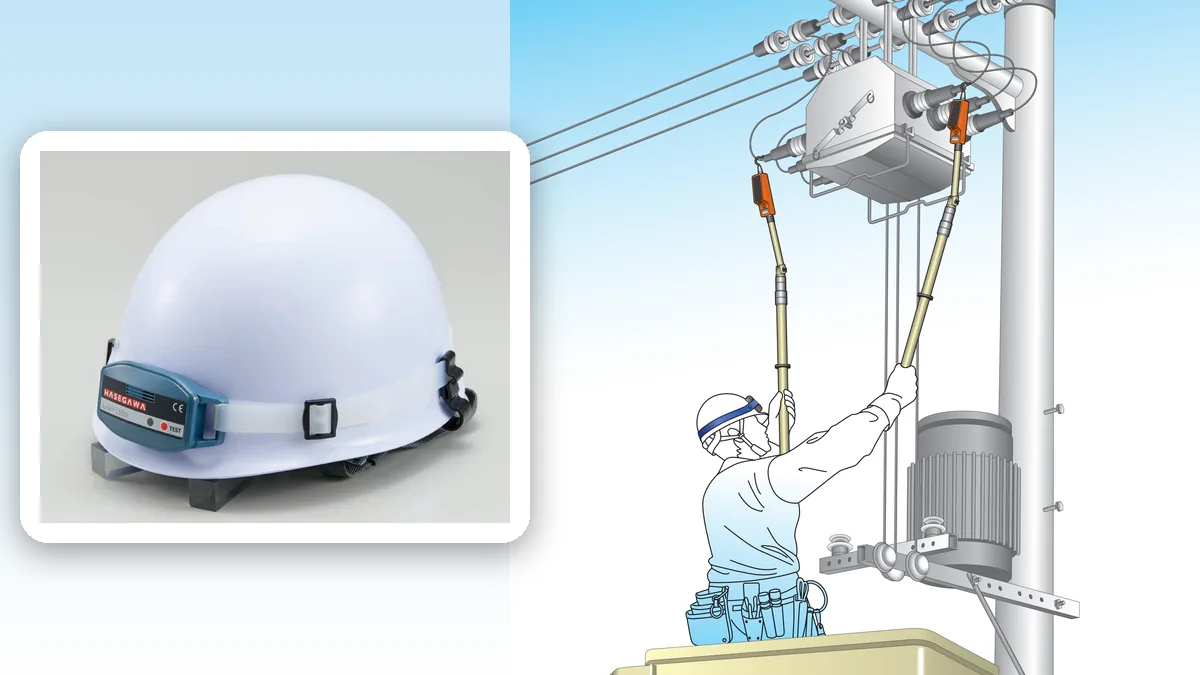
Worn on the arm during pole-top and overhead line work, providing continuous warning over a wide range of movement. See arm proximity alarms.
Helmet-type proximity alarms
Fixed to the safety helmet, protecting the head and upper body while leaving both hands free. A comfortable option for long overhead line maintenance jobs. See helmet proximity alarms.
5 questions for choosing the right proximity alarm
- What is the nominal voltage of the network? The model's operating range must cover it.
- Will the work be inside a cubicle or on an overhead line?
- Does the worker need both hands free? (Helmet type is an advantage.)
- Is the site noisy? Choose a model with a high sound level (e.g. at least 65 dB at 60 cm) and, if needed, a visual warning.
- Does it have a pre-use test button and a battery indicator?
Can a proximity alarm replace a voltage detector?
No. A proximity alarm is a complementary device used as a warning while work is in progress. To confirm that a line is dead, always test with a voltage detector of the appropriate voltage rating, then earth the line. For the correct sequence, see our guide to earthing sets.
Use and maintenance tips
- Before each use, confirm that the device works using its test function.
- Check the battery level regularly; a weak battery can reduce sensitivity.
- Protect the device from moisture, impact and long periods in direct sunlight.
- Have function checks carried out at the intervals recommended by the manufacturer.
Frequently Asked Questions
Does a proximity alarm work on DC lines?
Proximity alarms that sense the electric field are designed for AC lines. On DC systems (e.g. railway catenary lines), use equipment made specifically for that purpose.
How many proximity alarms does a crew need?
Every worker at risk of approaching live equipment should have their own proximity alarm; it is a personal protective device.
Our specialist team can help you choose the right model for your project free of charge, and you can use the quote form to get a same-day quotation on business days.