Earthing Sets: The Basic Rules for Working Safely on Power Lines

A de-energised line is not safe until it has been earthed. We summarise how to choose the right earthing set and the correct order in which to apply it.
Earthing and short-circuiting is one of the basic safety rules of electrical work. On a de-energised line it is the last barrier protecting workers if the circuit is unexpectedly re-energised.
The five safety rules
In Europe these rules are set out in EN 50110-1, the standard for the operation of electrical installations:
- Disconnect completely and open the isolators.
- Secure against reconnection (lock out and tag).
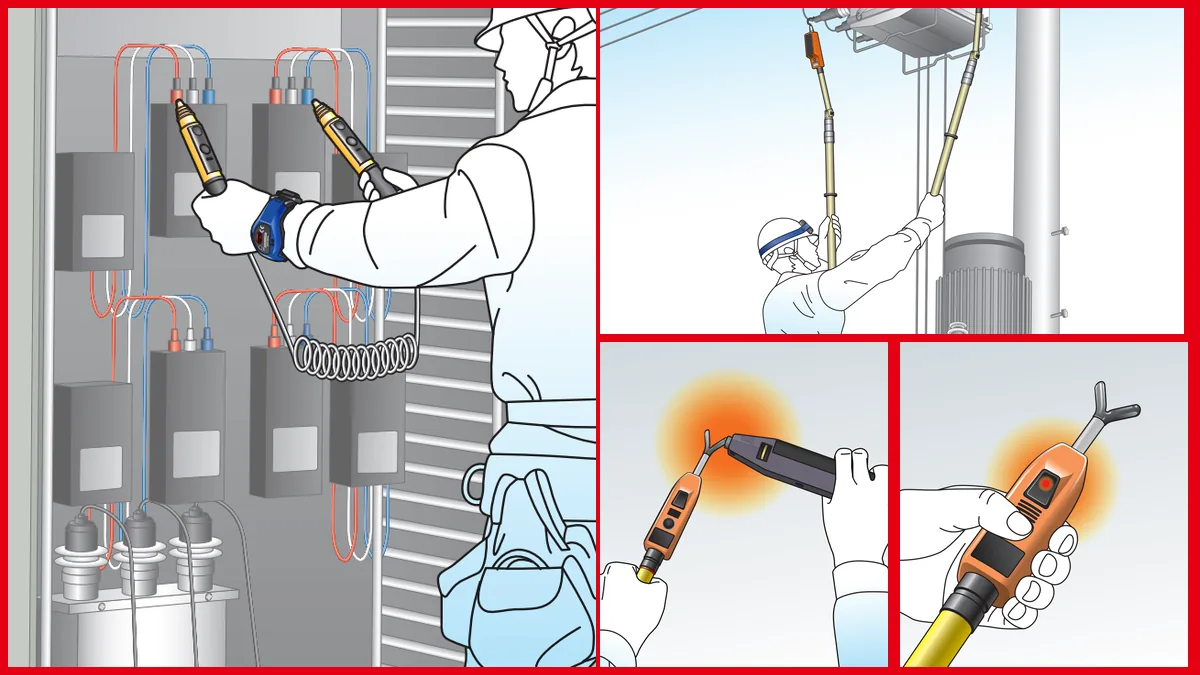
- Verify the absence of voltage with a voltage detector.
- Earth and short-circuit.
- Provide protection against adjacent live parts by covering or barriers.
How to choose the right earthing set
Application
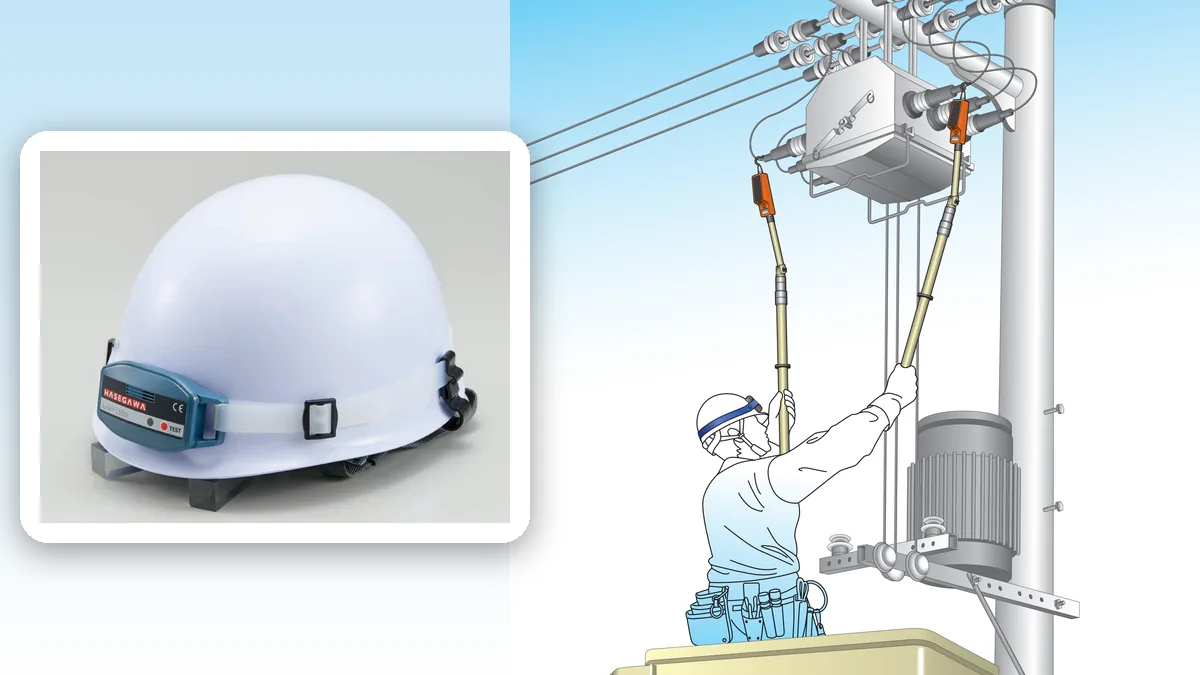
For switchgear cubicles, cubicle earthing sets (HASEGAWA Type H, HA-W, HC, HF) are used; for transmission lines, telescopic earthing rods (Type Z, Type Y). Railway applications use special hooks that can be secured without being passed under the rail.
Cable cross-section and length
The cross-section of the earthing cable must be chosen according to the short-circuit current of the installation. The length should suit the distance between connection points without leaving unnecessary slack.
Clamps and connection fittings
Choosing a clamp that matches the conductor type and diameter is essential for reliable contact.
Discharging residual charge
Cables and capacitor banks can hold a dangerous charge even after the supply has been switched off. Residual charge should therefore be safely drained with discharge sticks (e.g. HRD-27S) before earthing.
Conclusion
Earthing sets are configured to order. To specify the right set for your installation, contact us with the clamp type, stick type, cable cross-section and operating voltage.