What Is an Arc Flash? Causes, Effects and How to Prevent It
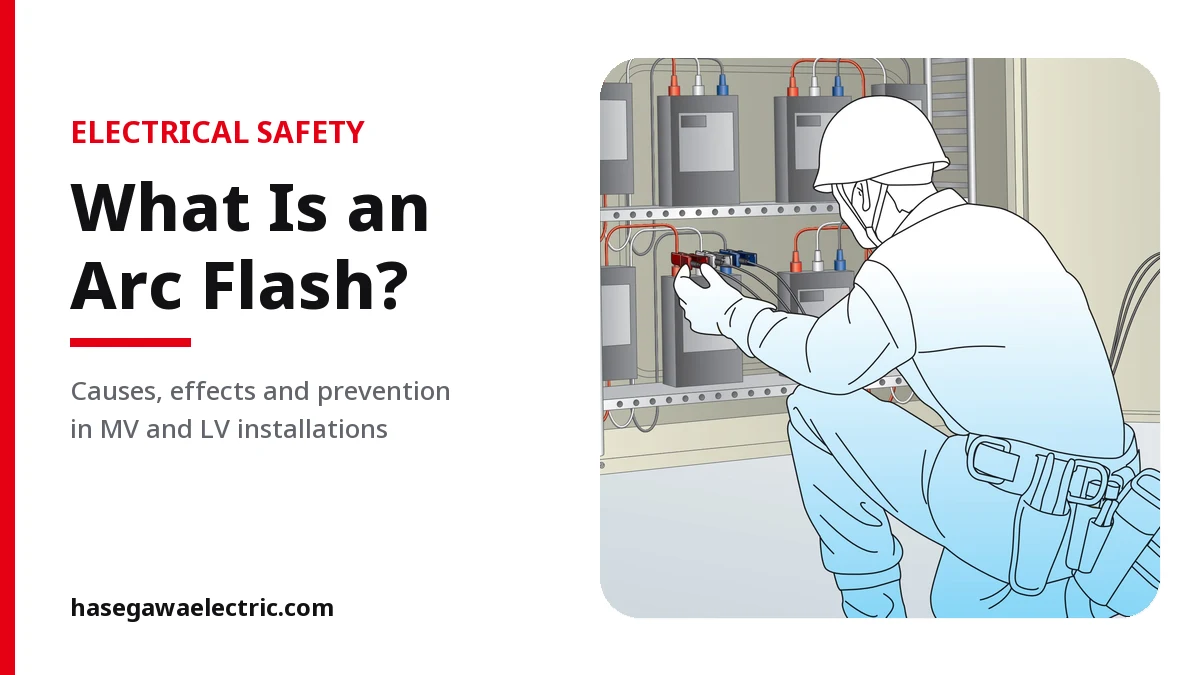
How an arc flash develops, where it happens most often on site and how to prevent it in MV and LV installations, from de-energised work to arc-rated PPE.
An arc flash is a sudden, very high-energy electrical discharge that occurs when current flows through ionised air between two conductors or between a conductor and earth. Within milliseconds it releases intense heat, blinding light, a pressure wave and molten metal. The most effective protection is to work de-energised, keep away from live parts and prove absence of voltage with the right detector; arc-rated personal protective equipment is the last line of defence.
This article explains how an arc flash develops, where it happens most often on site and which measures reduce the risk in medium-voltage (MV) and low-voltage (LV) installations.
How does an arc flash happen?
Air is normally a good insulator. When the gap between two conductors is bridged or shortened by a tool, a hand, dust, moisture or a fault, the air breaks down and current starts to flow through it. The arc lasts until a fuse or circuit breaker clears the fault, and energy keeps being released for the whole of that time.
The main factors that decide how severe an arc is:
- Prospective short-circuit current: at points close to the source (transformer terminals, main switchboards) the arc energy is very high.
- Clearing time: the slower the protection operates, the longer the arc lasts; incident energy grows with time.
- Working distance: the heat reaching the worker drops quickly with distance from the arc.
- Enclosure: in panels and switchgear the arc energy is directed towards the open door, that is, towards the worker.
Effects of an arc flash
- Burns: arc temperatures are extremely high; unsuitable clothing can ignite and make burns worse.
- Eye damage: intense light and ultraviolet radiation harm the eyes.
- Pressure wave: can throw the worker, causing falls and injuries.
- Molten metal and fragments: copper and aluminium conductors vaporise and spatter.
- Noise: the blast can cause hearing damage.
Most common causes on site
- Working on a section believed to be dead: opening the wrong panel, a wrongly labelled circuit or back-feed.
- Earthing without testing: connecting an earthing device to a live conductor.
- Dropped tools or parts: a spanner or nut falling onto busbars bridges the phases.
- Using the wrong detector: concluding "dead" with a detector that is not rated for the voltage or was not tested.
- Poorly maintained equipment: dust, moisture, loose connections and ageing insulation.
Most of these causes are human errors, and all of them can be prevented by following the right sequence of work.
How to prevent an arc flash
1. Work de-energised
The most reliable measure is to do the job dead. That is why the five safety rules of EN 50110-1 exist: disconnect, secure against reconnection, verify absence of voltage, earth and short-circuit, and protect against adjacent live parts.
2. Verify absence of voltage properly
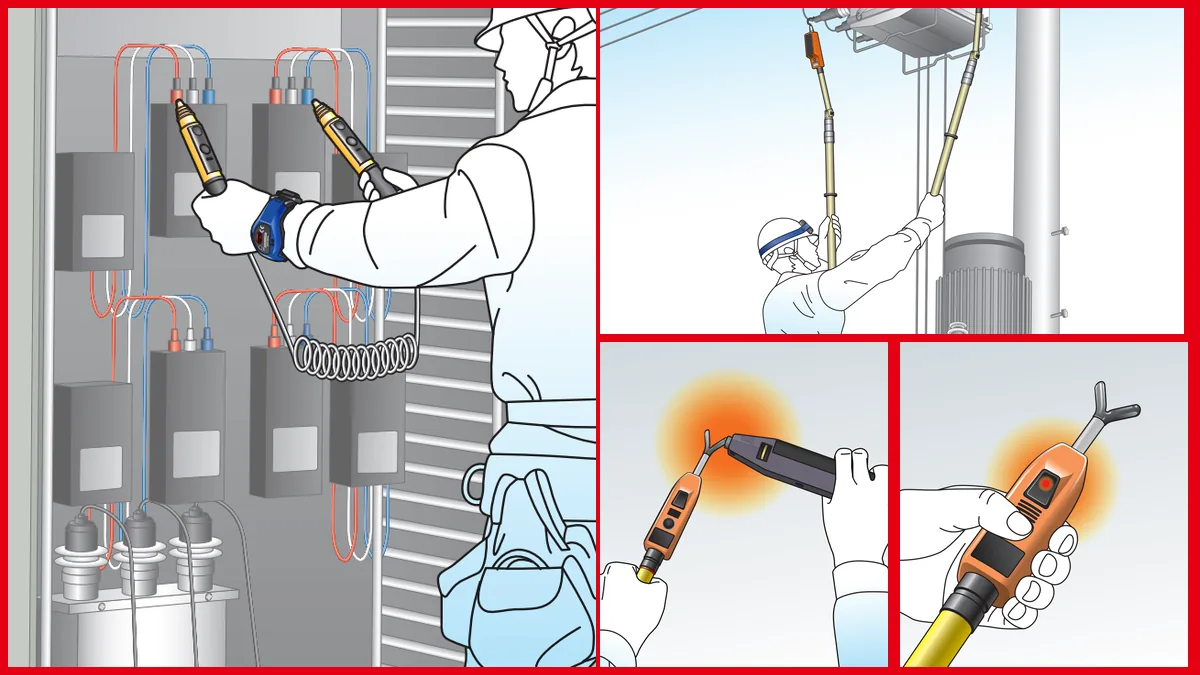
The voltage check before earthing is a critical step in preventing arc accidents. Use a detector rated for the voltage, compliant with standards such as IEC 61243-1 and tested before use. For the step-by-step method see How to Use a Voltage Detector.
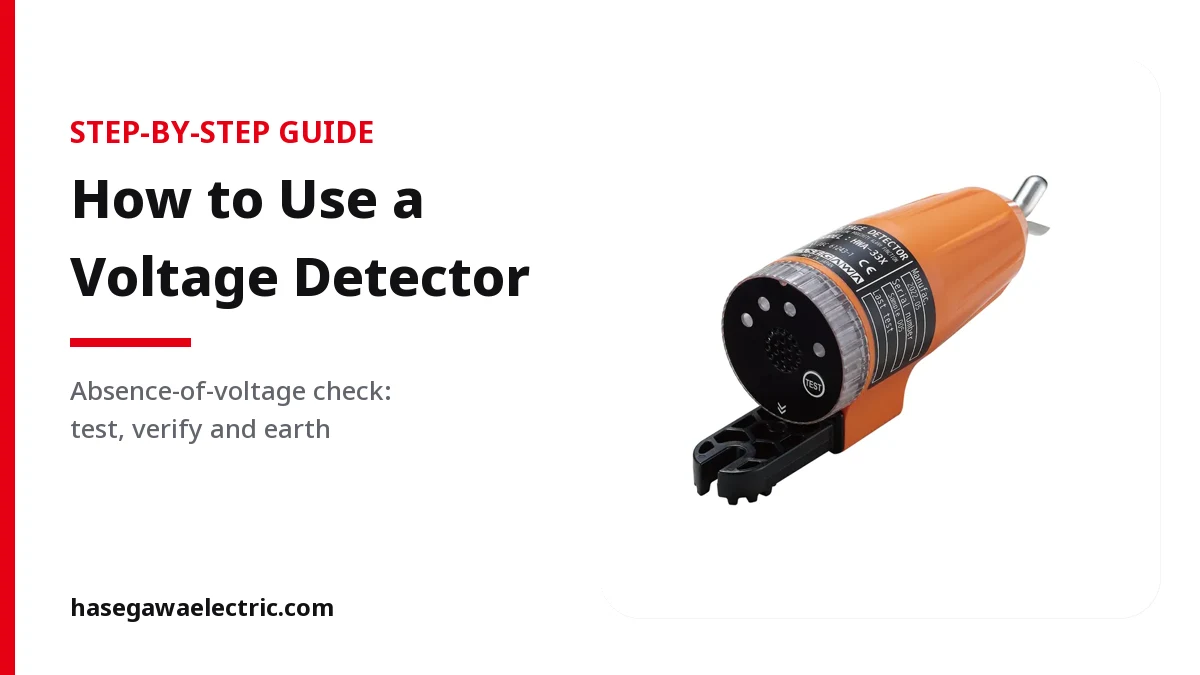
In medium voltage, detectors with proximity warning such as the HWA-33X warn in stages before contact, giving an extra margin of safety while approaching the conductor.
3. Keep away from live parts
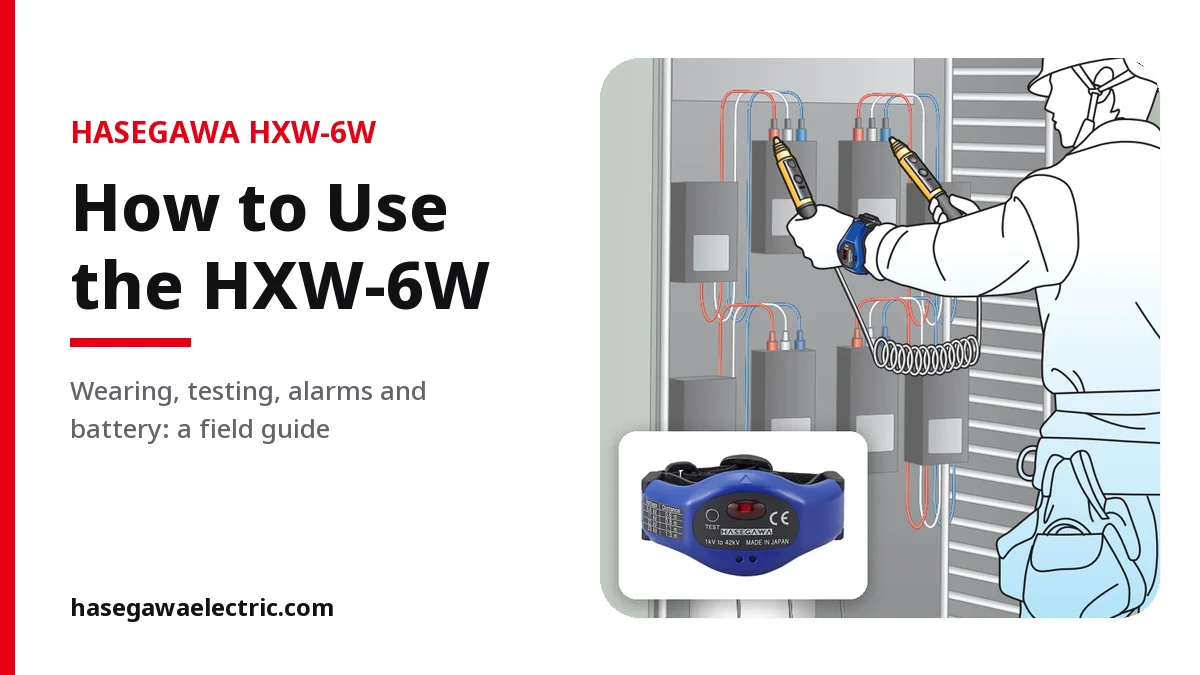
With a switchgear door open, a live busbar may sit right next to the isolated feeder. Proximity alarms such as the wrist-worn HXW-6W or the helmet-mounted HXA Series sound when the worker unknowingly approaches a live part, stopping the movement that could start an arc.
4. Discharge and earth
Cables and capacitors can hold charge after disconnection. Drain residual charge with a discharge stick, then earth the work location with earthing sets.
5. The right personal protective equipment
If live work cannot be avoided, protection suited to the arc risk is needed: arc-rated clothing (IEC 61482-2), face shield, insulating gloves and suitable footwear. Synthetic, easily melting clothing makes arc burns worse. PPE should be selected on the basis of the employer's risk assessment.
6. Planning and maintenance
- Carry out a risk assessment for main switchboards and MV switchgear and label high-risk points.
- Check protection settings and clearing times regularly.
- Keep panels clean and dry and fix loose connections during periodic maintenance.
- Train crews regularly on safe working in MV switchgear.
Summary: layered protection
| Layer | Purpose | Example |
|---|---|---|
| De-energised work | Remove the hazard | Five safety rules, lock-out |
| Voltage verification | Prove the installation is dead | Voltage detector, detector tester |
| Proximity warning | Stop approach to live parts | HXW-6W, HXA Series |
| Earthing | Protect against unexpected energy | Discharge stick, earthing set |
| PPE | Reduce the remaining risk | Arc-rated clothing, face shield |
No single layer is enough on its own; arc accidents are prevented when these layers are applied together.