Voltage Testing and Earthing on Railway Catenary Lines

AC and DC catenary, third-rail and monorail systems each need different voltage testing equipment. We summarise the safe working steps and how to choose equipment for railway electrification maintenance.
Railway maintenance crews work on a range of live structures, from the catenary wire and third rail to traction substations. Because these systems differ in voltage level and current type (AC/DC), voltage detectors designed specifically for railway use are required.
Railway electrification systems
| System | Current type | Where used |
|---|---|---|
| Conventional and high-speed catenary | AC | Main lines and high-speed lines |
| DC 1500 V catenary | DC | Suburban and metro lines |
| DC 750 V third rail | DC | Metro and light rail |
| Monorail | DC | Monorail lines |
The danger of residual voltage on DC lines
On DC systems, residual voltage can remain on the line for some time after the supply is cut. That is why the information "power is off" must always be verified on site. The HASEGAWA HVC-1.5N3 displays the decaying residual voltage on DC 1500 V catenary lines, helping the crew judge the safe moment correctly.
Other DC solutions:
- HVC-750N3 – DC 750 V third-rail systems
- HVC-1.5N3S – DC 1500 V traction substations
- HVC-1.5N3M – monorail lines
AC catenary lines
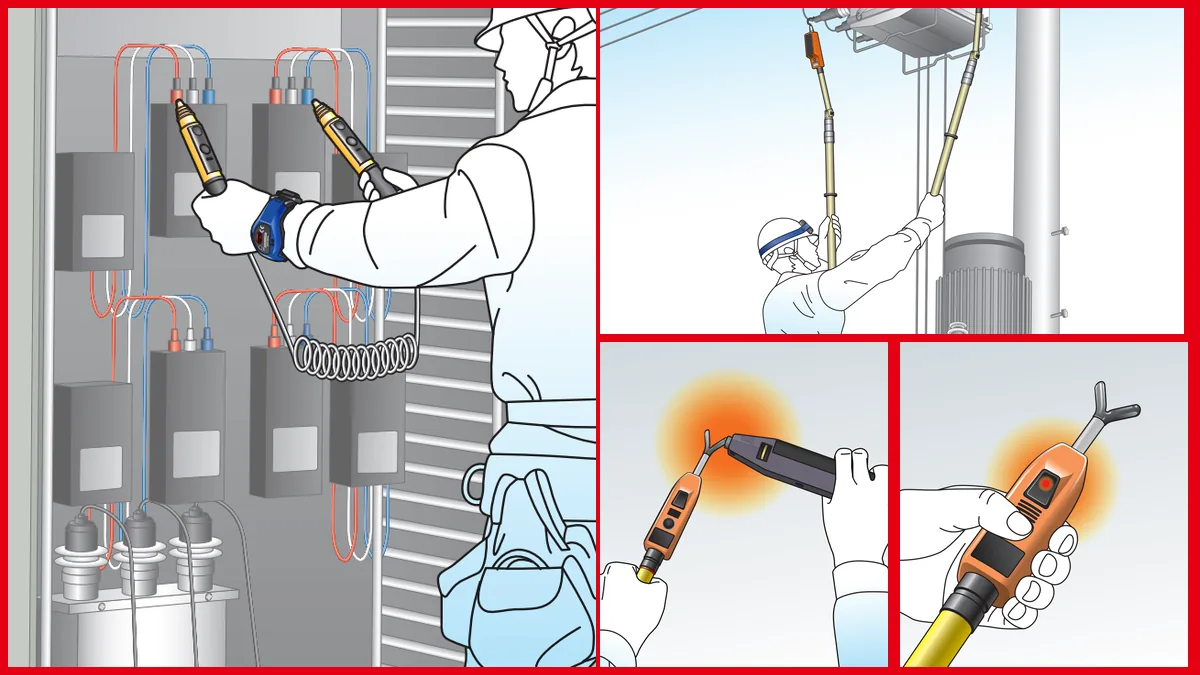
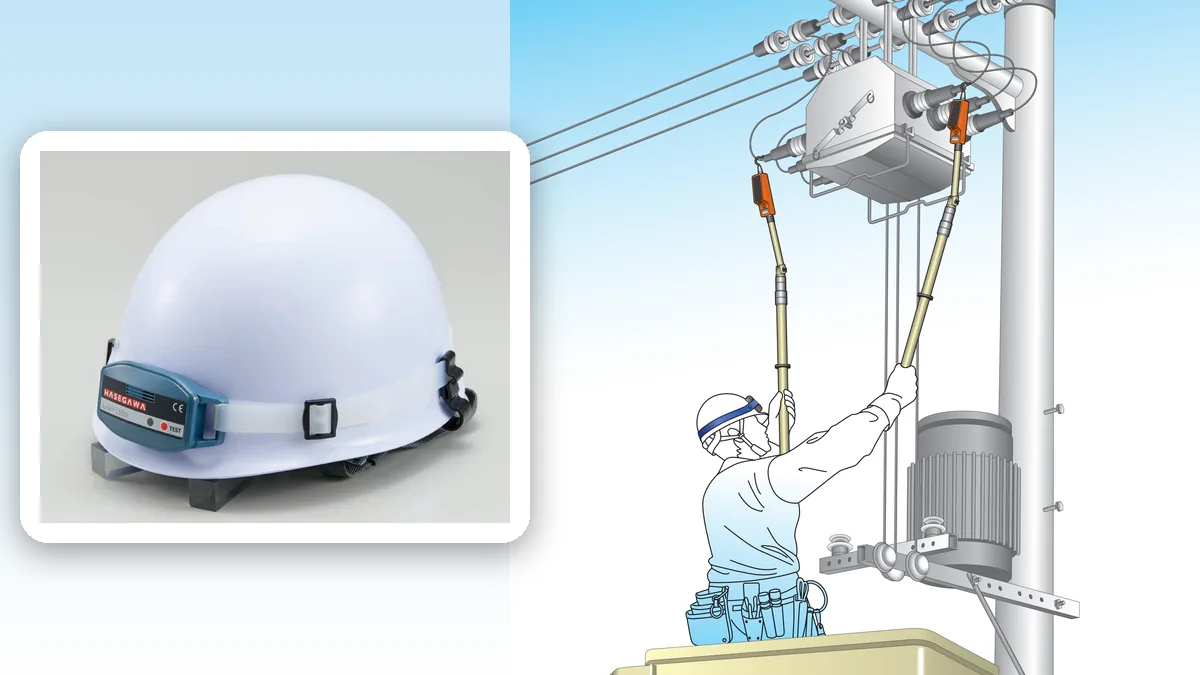
On AC catenary systems, hot stick detectors rated for the system voltage are used. The HST-W80JS is designed for conventional and high-speed AC catenary lines in the range AC 20 kV – 80.5 kV.
Safe working sequence
- Confirm the isolation instruction and permit to work; mark out the work area.
- Test the detector before use.
- Verify the absence of voltage with a detector suited to the system type (AC/DC) and voltage level.
- On DC lines, confirm that residual voltage has fallen away completely.
- Earth the line with a suitable railway earthing hook or Type R DC earthing hook.
- When work is complete, remove the earths in reverse order and hand back the area.
For more on earthing principles, see our guide to earthing sets.
Frequently Asked Questions
Can a standard high-voltage detector be used on a catenary line?
For AC catenary, hot stick detectors rated for the system voltage can be used; however, detectors designed for AC will not give a correct result on DC systems. Always use a detector designed for DC on DC lines.
What is the lead time for railway products?
It depends on stock and the project. For up-to-date information, request a quotation for the product concerned from the railway products page.
We support railway projects with volume orders and technical specification assistance. Request a quotation.