Electrical Safety at Work in Europe: EN 50110-1 and the EU Framework
Which EU directives and European standards govern work on electrical installations, how the five safety rules of EN 50110-1 fit in, and what this means for the equipment you buy.
Every European country has its own electrical safety rules, but they are built on the same foundations: a handful of EU directives that set the employer's duties, and the European standard EN 50110-1, which describes how work on electrical installations is organised and carried out. If you buy voltage detectors, earthing sets or proximity alarms for teams in Europe, this is the framework those products are used in.
This article is a practical overview, not legal advice. Always check the national legislation and your company's own procedures.
The EU directives behind electrical safety at work
Framework Directive 89/391/EEC is the basis of occupational safety law across the EU. It requires employers to assess risks, prevent them at source, provide information and training, and consult workers. Electrical work is one of the risks it covers.
Work Equipment Directive 2009/104/EC requires that work equipment is suitable for the job, used by trained people, and inspected and maintained so that it stays safe. Voltage detectors, earthing sets and insulating poles are work equipment in this sense, which is why regular checks matter.
PPE Regulation (EU) 2016/425 sets the requirements for personal protective equipment placed on the EU market, such as insulating gloves, arc-rated clothing and helmets.
Low Voltage Directive 2014/35/EU covers the safety of electrical equipment designed for 50–1000 V AC and 75–1500 V DC.
Each member state transposes the directives into national law and adds its own rules. Germany, for example, applies DIN VDE 0105-100, its national version of EN 50110-1, alongside the accident insurance (DGUV) regulations.
EN 50110-1: operating electrical installations
EN 50110-1 (Operation of electrical installations – Part 1: General requirements) applies to work on, with or near electrical installations at all voltage levels. It defines:
- Roles and competence: who is a skilled person, an instructed person or an ordinary person, and who may do what.
- Responsibilities: the person in control of the installation and the person in control of the work, and how they hand over.
- Three working methods: dead working, live working and working in the vicinity of live parts.
- Procedures: switching, isolation, permits and communication.
Part 2 (EN 50110-2) contains the national annexes with each country's additional requirements.
The five safety rules
For dead working, EN 50110-1 requires five steps, normally in this order:
- Disconnect completely. Isolate the work location from all sources of supply.
- Secure against re-connection. Lock off switching devices and attach warning signs.
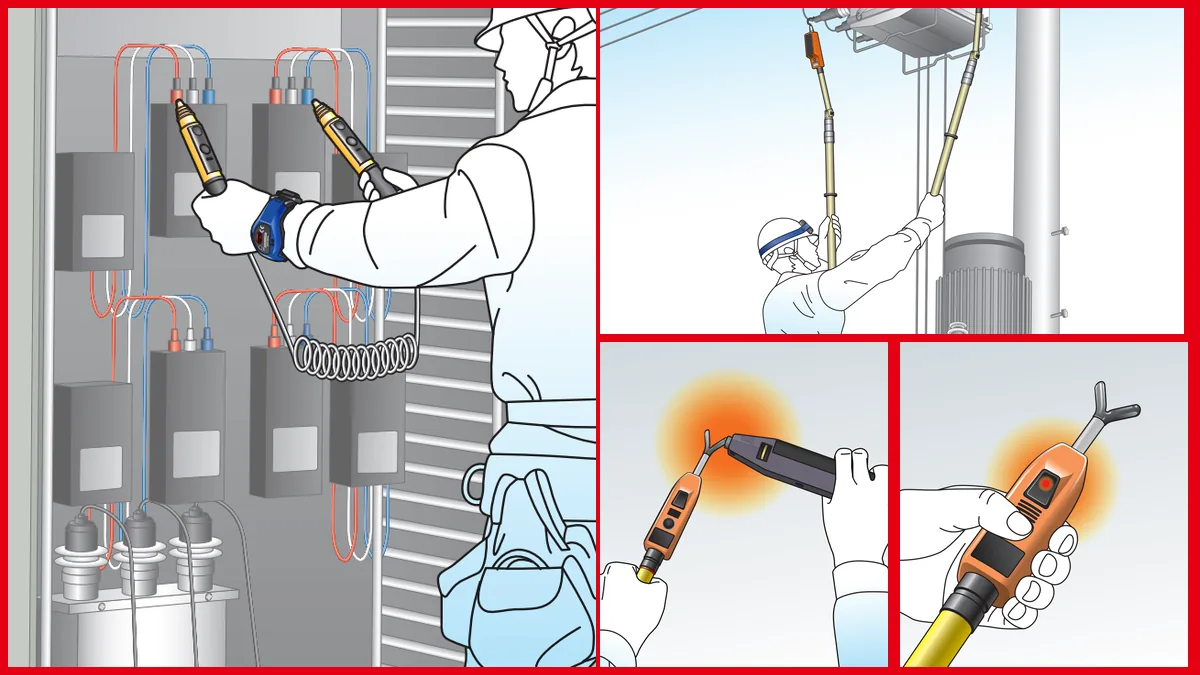
- Verify that the installation is dead. Test every conductor at or near the work location with a suitable voltage detector.
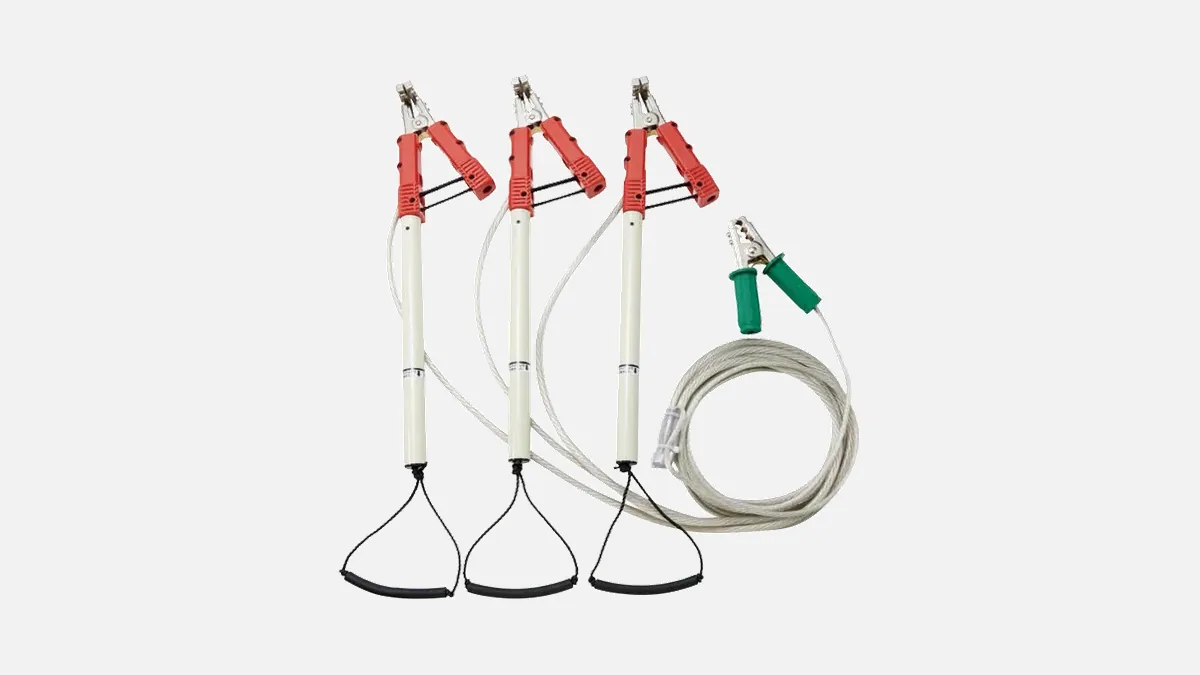
- Carry out earthing and short-circuiting. Apply earthing equipment to protect against unexpected re-energisation and induced voltages.
- Provide protection against adjacent live parts. Use barriers, covers or insulating shrouds where live parts remain nearby.
The rules are reversed when the work is finished. Our article The Five Safety Rules explains each step in detail.
What this means for the equipment you buy
Verifying absence of voltage
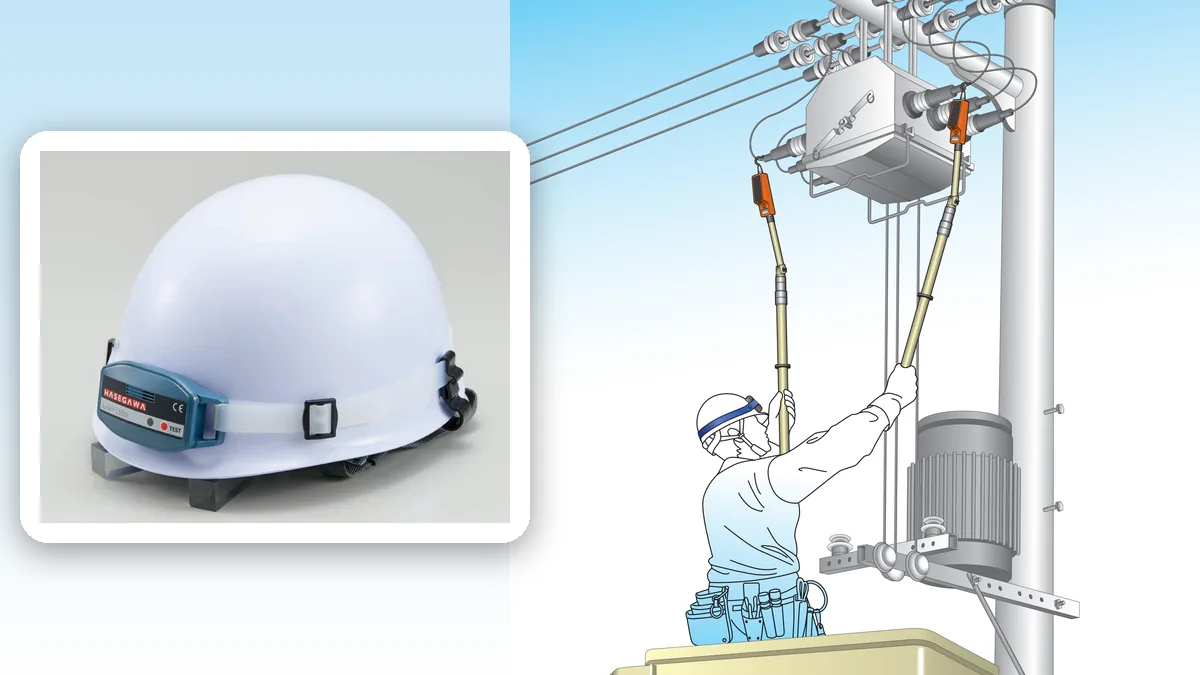
The detector must be rated for the nominal voltage of the system, suitable for indoor or outdoor use as required, and checked before and after each use. For systems above 1 kV, capacitive detectors are specified in IEC 61243-1; resistive detectors in IEC 61243-2. Choose a pole length that keeps the user at the minimum approach distance.
- Universal-joint high-voltage detectors for switchgear and overhead lines
- Hot-stick high-voltage detectors for work at a distance
- Low-voltage detectors for systems up to 1000 V
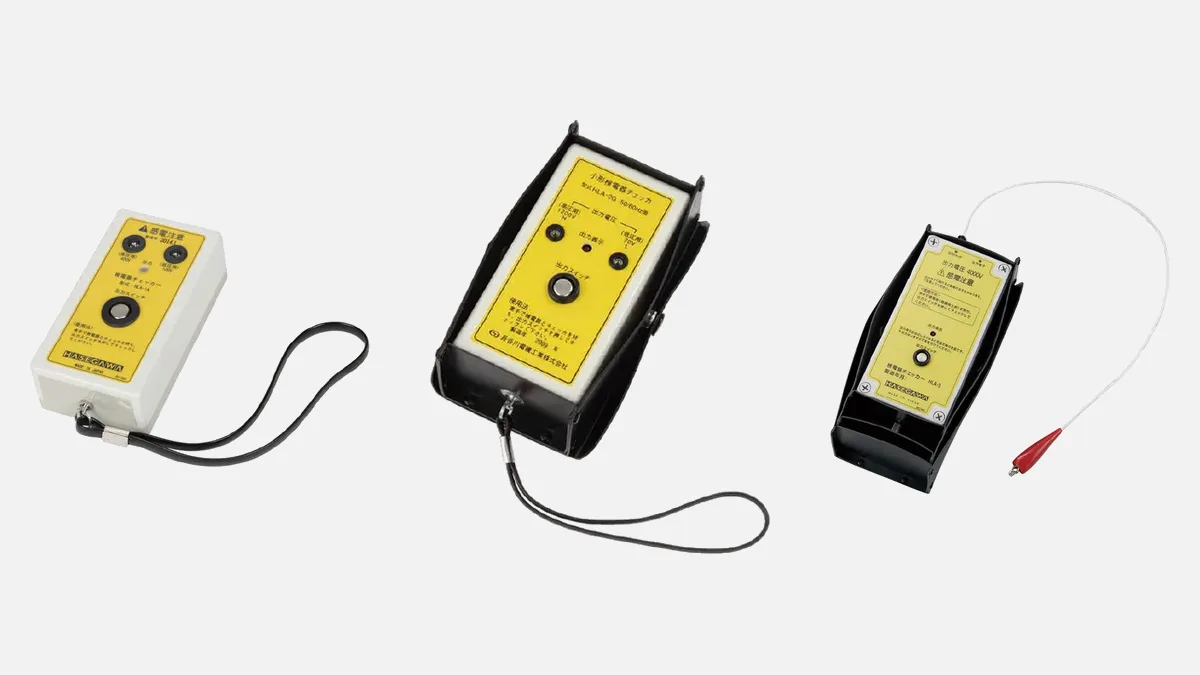
- Voltage detector testers to confirm the detector works before use
Earthing and short-circuiting
Portable earthing equipment is specified in IEC 61230. The cable cross-section and clamps must withstand the prospective fault current for the clearing time of the protection. Apply the earth end first and remove it last.
- Cubicle earthing sets for indoor switchgear
- Transmission line earthing sets for overhead lines
- Custom earthing equipment built to your switchgear and fault level
Working near live parts
Where people work close to live equipment, such as overhead lines or energised switchgear, a personal proximity alarm gives an extra warning. It does not replace verification of absence of voltage.
Inspection and records
The Work Equipment Directive and most national rules expect equipment to be inspected at defined intervals and records to be kept. Mark every detector and earthing set with an identifier, record its checks, and withdraw damaged equipment from use. See Why Regular Checks of Voltage Detectors Matter.
Railways
Traction systems add their own rules: DC catenaries at 750 V and 1500 V, AC catenaries at 15 kV 16.7 Hz or 25 kV 50 Hz, and railway-specific earthing procedures. Detectors must match the traction system. See Railway Catenary Voltage Testing and our railway products.
Summary
- EU directives set the employer's duties; national law adds the details.
- EN 50110-1 defines how electrical work is organised and gives the five safety rules.
- Equipment standards such as IEC 61243-1 and IEC 61230 define what a good detector or earthing set must do.
- Specify the system voltage, fault level and required standard when you buy, and keep the equipment inspected.
Need help choosing equipment for a project in Europe? Request a quotation with your system voltage and application, and see Standards & Compliance for the standards we can confirm per model.