What Is a Phase Tester? Checking Phase Sequence and Phase Coincidence
Phase checks are vital when commissioning a new installation or paralleling two supplies. We summarise how low-voltage and medium/high-voltage phase testers work and how to use them.
In a three-phase system, the phases must be in the correct sequence and in agreement with each other so that motors turn the right way, generators can be connected to the grid safely and ring networks can be closed. A phase tester is the instrument that lets you carry out these checks quickly and safely.
Phase sequence vs phase coincidence
| Check | Question it answers | Typical application |
|---|---|---|
| Phase sequence (rotation) | Are the phases in L1-L2-L3 order, or reversed? | Motor connection, commissioning a new panel |
| Phase coincidence (in phase / out of phase) | Are conductors from two separate sources on the same phase? | Closing a ring, parallel supplies, checks before generator synchronisation |
Low-voltage phase testers
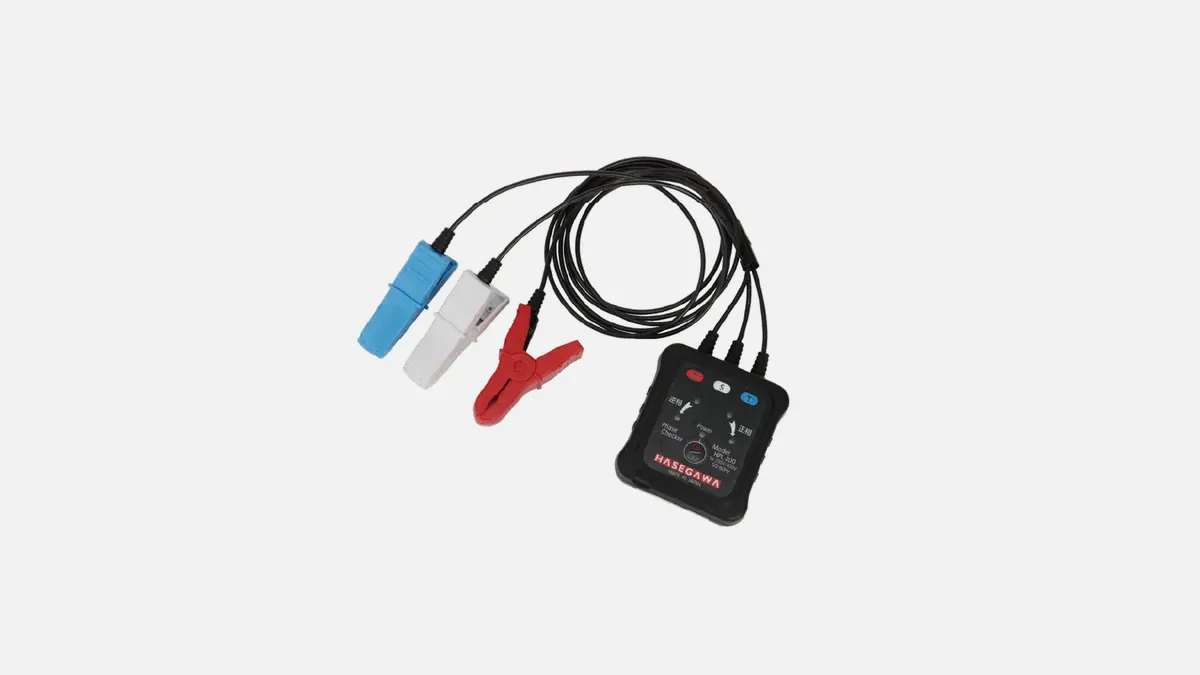
On the low-voltage side, compact three-lead instruments show the phase sequence of panels and motor connections in seconds. For example, the HASEGAWA HPL-200W checks both in-phase and out-of-phase conditions with a single instrument on AC 70 V – 1 kV three-phase systems. For other models, see the low-voltage phase testers category.
Medium- and high-voltage phase testers
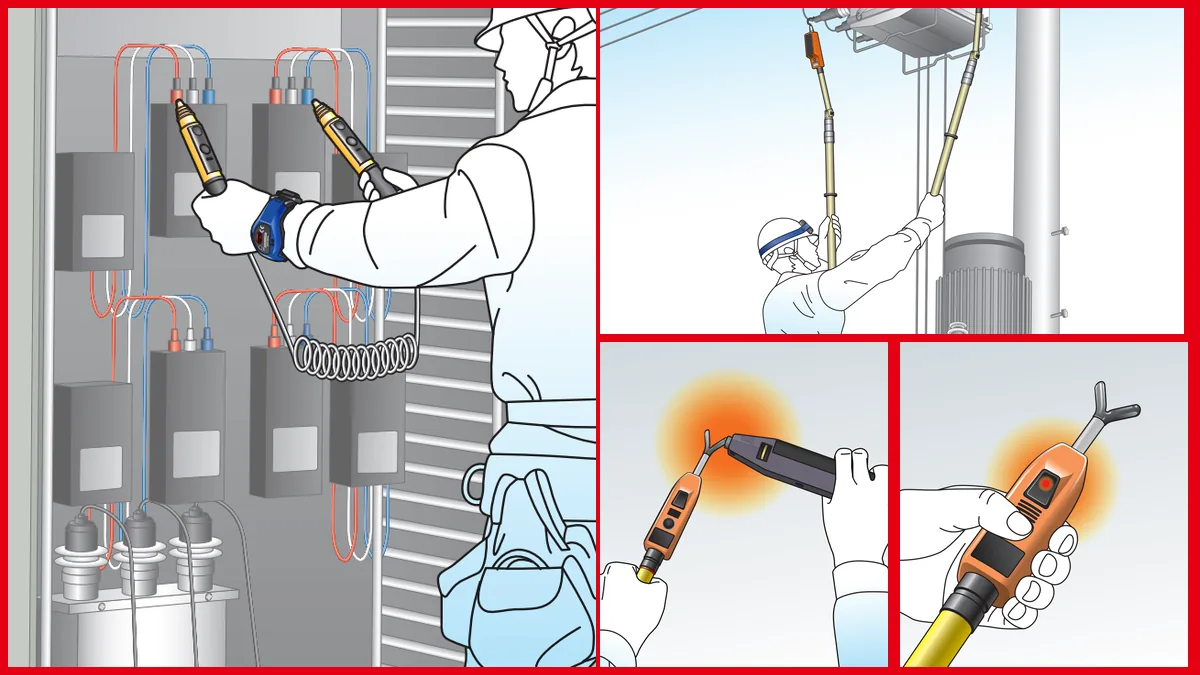
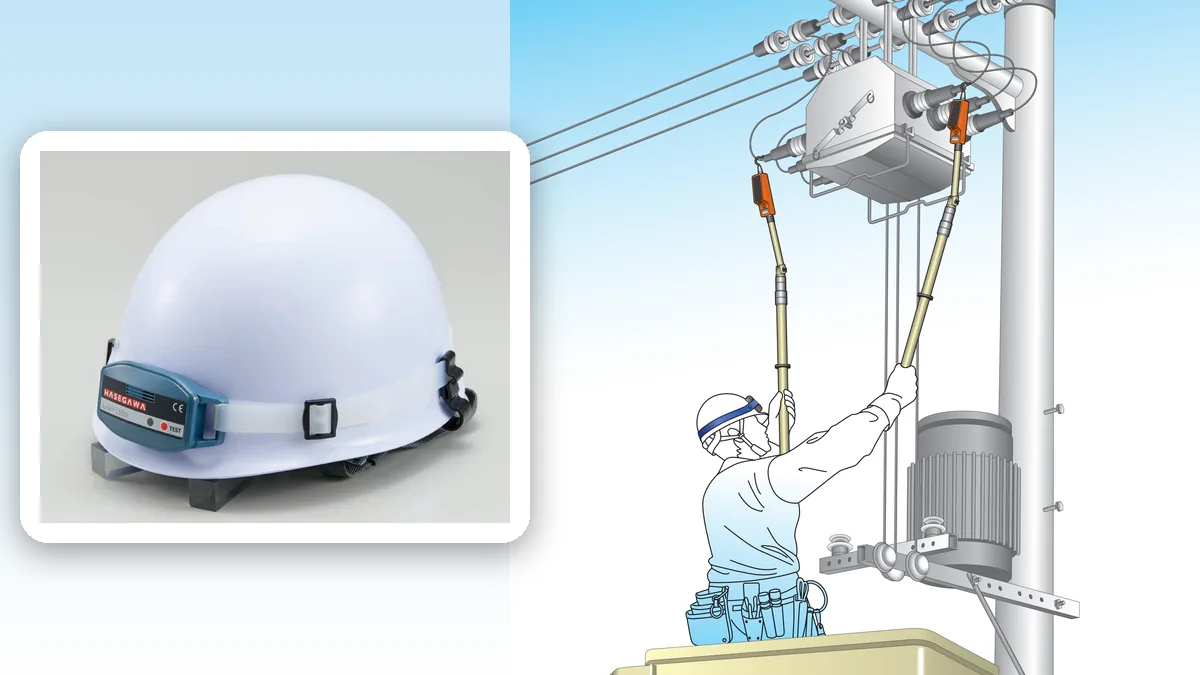
At medium voltage, the phase relationship between two conductors is checked with stick-mounted systems made up of two detectors insulated from each other. Safe insulation of the link between the two units is critical:
- HPI-S20W isolates the detector pair with fibre optics (AC 22 – 42 kV).
- HPR uses a wireless pair for easy use on site.
All options: medium / high-voltage phase testers.
Step-by-step phase check
- Obtain the permit to work and wear the required personal protective equipment (insulating gloves, face shield, suitable workwear).
- Confirm that the instrument's operating voltage range covers the system voltage.
- Check that the instrument works, using its own test function or a known live source.
- Connect the leads, or bring the sticks into contact with the conductors, in the order given in the manufacturer's instructions.
- Read the indicator and record the phase sequence or in-phase / out-of-phase result.
- After the measurement, test the instrument again to confirm it worked correctly throughout.
Common mistakes
- Using an instrument of the wrong voltage class.
- Skipping the instrument test before and after the measurement.
- Using a phase tester to confirm that a line is dead. Always use a voltage detector for that.
Frequently Asked Questions
What is the difference between a phase tester and a multimeter?
A multimeter measures voltage but does not show phase sequence. A phase tester shows phase sequence and phase coincidence directly, and is designed with insulation for safe use at medium voltage.
Can a low-voltage phase tester be used at medium voltage?
Absolutely not. Each instrument must only be used within the voltage range stated on its label.
Request a quotation for the right phase tester for your site; we supply genuine HASEGAWA products from the official distributor in Türkiye, with a commercial invoice.